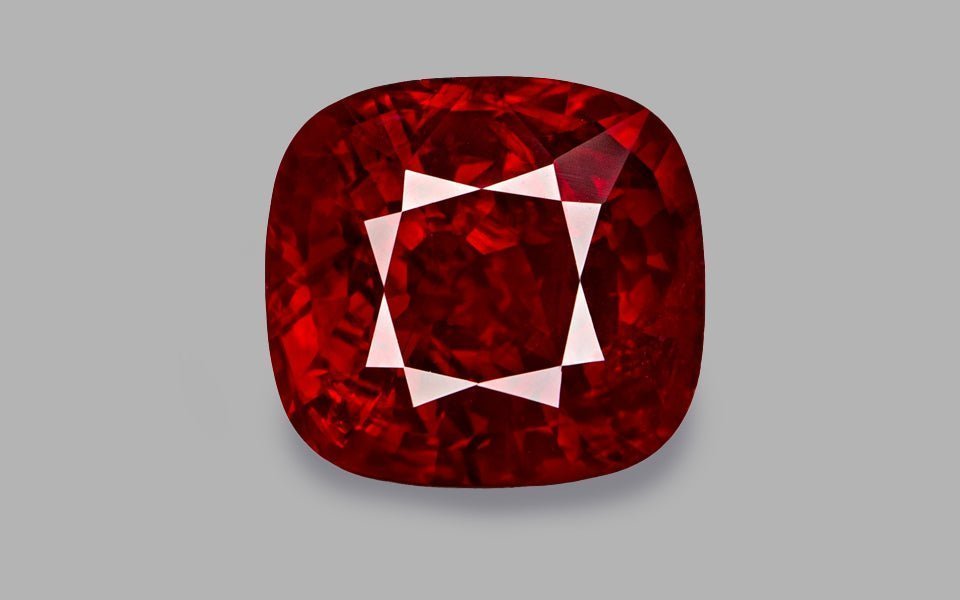
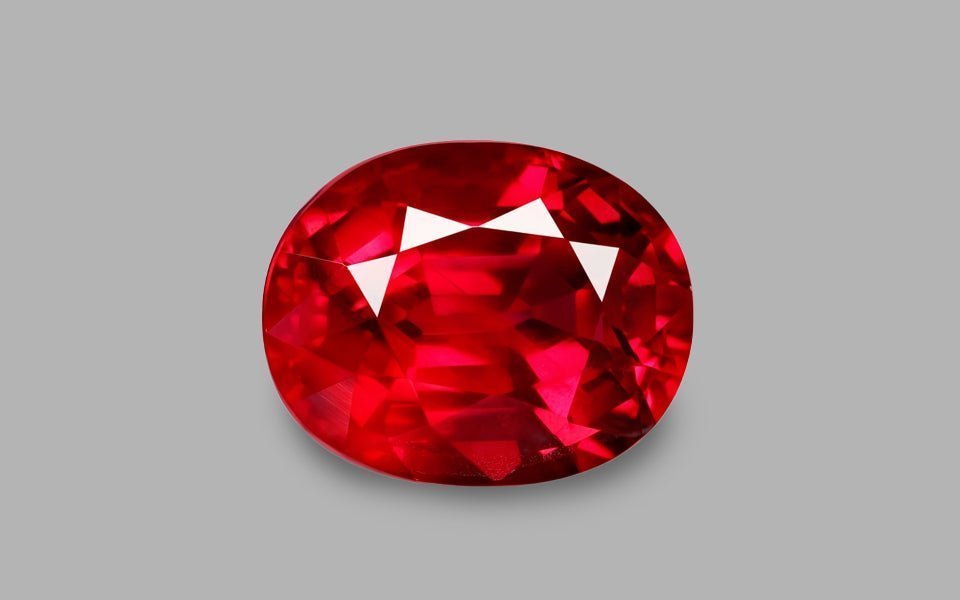
Why Invest in Natural Gems? – Beauty with Enduring Value
Introduction – Why Investors Are Looking Beyond Traditional Assets
For decades, traditional investments have formed the backbone of private wealth. Stocks promised growth, real estate offered stability, and gold served as a monetary anchor. Yet in an increasingly volatile and interconnected world, many investors are beginning to question whether these familiar instruments alone are sufficient.
Equity markets react instantly to sentiment and geopolitics. Real estate, while tangible, is immobile, heavily regulated, and increasingly capital-intensive. Even gold — long regarded as a safe haven — is a uniform commodity whose price is shaped by global markets rather than individual scarcity.
Against this backdrop, a growing number of investors are turning their attention to natural gemstones. Not as decorative objects or speculative trades, but as a distinct category of tangible assets shaped by geology rather than financial systems.
Investment-grade gemstones offer a rare combination of attributes: they are finite by nature, globally desired, highly portable, and independent of traditional market mechanisms. Their value is not derived from productivity or yield, but from scarcity that cannot be expanded, accelerated, or engineered.
This shift does not reflect a rejection of traditional investments. Instead, it reflects a search for balance — for assets that exist outside digital infrastructure, regulatory frameworks, and short-term market cycles. For investors who think in decades rather than quarters, gemstones represent a quiet, disciplined approach to preserving value across time.
What Makes Gemstones a Distinct Investment Category
Gemstones occupy a unique position in the investment landscape. They are neither financial instruments nor traditional commodities. Instead, they represent a category of tangible assets whose value is defined by natural scarcity, cultural continuity, and long-term desirability rather than cash flow or industrial utility.
Finite Supply Defined by Geology
Unlike assets that can be created, issued, or expanded in response to demand, gemstones are constrained by geology. They exist only because specific natural conditions occurred millions of years ago — and once a deposit is depleted, no economic incentive can recreate it.
This makes gemstone supply fundamentally non-responsive. Rising demand does not lead to increased production in the way it does with manufactured goods or financial assets. Over time, this structural limitation becomes one of the strongest supports for long-term value preservation.
Global Demand Across Cultures and Generations
Fine gemstones are desired across cultures, continents, and generations. Rubies, sapphires, emeralds, and other investment-grade stones carry significance that transcends fashion cycles and regional markets.
Their desirability is reinforced by tradition, symbolism, and long-standing use as stores of value in regions ranging from Europe to the Middle East and Asia. This global demand base contributes to resilience, even during periods of economic uncertainty.
Wealth Density and Portability
Few assets offer the same concentration of value in such a compact, portable form. A single gemstone can represent substantial wealth while remaining discreet, easily stored, and independent of physical infrastructure.
For investors who value mobility, privacy, and direct ownership, this combination of wealth density and portability represents a meaningful advantage over larger, less flexible asset classes.
Independence from Financial Systems
One of the most distinctive characteristics of investment-grade gemstones is their independence from financial systems. Unlike stocks, bonds, or funds, gemstones are not issued, traded, or priced through centralized exchanges or digital infrastructure.
Their value does not depend on interest rates, monetary policy, corporate performance, or algorithmic trading. Instead, it evolves through long-term collector demand, geological scarcity, and private market transactions that are often insulated from short-term volatility.
This independence does not imply immunity from all economic forces, but it does mean that gemstones follow a different rhythm than traditional assets. They are not marked-to-market daily, nor are they subject to forced selling driven by margin calls or liquidity events.
For investors seeking assets that exist outside financial systems — without counterparty risk, leverage, or reliance on institutions — this structural separation represents a meaningful form of diversification. Gemstones are owned directly, held physically, and valued independently of the mechanisms that govern modern financial markets.
Rarity – The Foundation of Long-Term Value
How rarity translates into long-term value behavior and selectivity is explored further in our dedicated articles, Why Gemstones Hold Value Over Time and Which Gemstones Appreciate in Value .
At the core of gemstone investing lies a principle that precedes price, performance, and market perception: rarity. Without genuine scarcity, gemstones remain attractive objects — but they do not function as enduring assets.
Rarity in gemstones is not subjective. It is defined by natural limitations that cannot respond to demand: finite geological supply, exceptional color that occurs only in a fraction of material, meaningful size without compromise, and the absence of artificial enhancement.
This is why rarity consistently comes before value, not the other way around. A gemstone does not become rare because it is expensive. It becomes expensive because it represents characteristics that cannot be recreated once they disappear from the market.
A detailed explanation of how rarity is defined, measured, and distinguished from marketing language is explored in our dedicated guide, What Makes a Gem Rare? Understanding the True Meaning of Rarity .
Understanding rarity allows investors to separate decorative stones from those with lasting significance — and forms the foundation upon which long-term value in gemstones is built.
How Gemstones Compare to Other Investment Assets
Investors rarely evaluate gemstones in isolation. The relevant question is not whether gemstones are attractive, but how they behave in relation to assets that investors already understand.
When viewed through this lens, gemstones reveal characteristics that differ fundamentally from financial instruments, commodities, and traditional stores of wealth. Their value is not derived from productivity, yield, or uniform pricing, but from individual scarcity and long-term desirability.
Gemstones vs. Stocks – Volatility vs. Patience
Stocks are designed for growth, but that growth comes with volatility. Equity prices react instantly to earnings reports, interest rates, geopolitical events, and shifts in market sentiment. This responsiveness creates opportunity — and risk.
Gemstones follow a different trajectory. They are not priced continuously, nor are they influenced by short-term news. Their value evolves gradually through collector demand, rarity, and the steady removal of exceptional stones from the open market.
This difference does not make gemstones superior to stocks. It makes them complementary. Where equities reward speed and timing, gemstones reward patience and long-term perspective.
Gemstones vs. Gold – Uniformity vs. Individual Rarity
Gold is a globally recognized store of value. Its strength lies in uniformity: one ounce is interchangeable with another, and price discovery is transparent and liquid.
Gemstones operate on the opposite principle. Each stone is unique. Two gemstones of identical weight may differ dramatically in value based on color, origin, treatment status, and rarity.
Gold protects value through standardization. Gemstones preserve and enhance value through individuality.
Gemstones vs. Collectibles – Simplicity vs. Complexity
Fine art, watches, and other collectibles share certain similarities with gemstones: rarity, cultural significance, and emotional appeal. However, many collectibles require ongoing maintenance, specialized storage, or dependence on trends and gatekeepers.
Gemstones are structurally simple. They do not degrade, require no restoration, and are easily verified through independent certification. This simplicity reduces friction in ownership and transfer, making gemstones a uniquely efficient form of collectible asset.
Historical Performance and Market Behavior
Gemstones do not trade on public exchanges, and their market does not move in short-term cycles. Instead, their performance is shaped by scarcity, collector behavior, and long-term shifts in global wealth. This gives the gemstone market a rhythm that is slower — and often more resilient — than that of financial assets.
Over multiple decades, top-quality gemstones have demonstrated a consistent pattern: exceptional stones tend to hold value through periods of economic instability, while truly rare material often becomes more sought after as supply diminishes. This behavior has been observed repeatedly in auction markets and private transactions.
Historic auction results provide a useful reference point. Untreated rubies, fine sapphires from classic origins, and high-quality emeralds have achieved record prices not because of speculative demand, but because comparable stones rarely re-enter the market. When they do, competition among collectors is typically strong.
Unlike trend-driven luxury goods, fine gemstones do not become obsolete. Their desirability is reinforced by time rather than eroded by it. As exceptional stones are absorbed into private collections, the available pool shrinks — quietly strengthening long-term market support.
This does not imply linear growth or guaranteed appreciation. Gemstones reward selectivity, patience, and quality. Their historical behavior suggests stability rooted in scarcity, not performance driven by momentum.
The Modern Investor’s Perspective
Today’s investors operate in an environment defined by speed, transparency, and constant information flow. While access to markets has never been easier, confidence in long-term stability has become harder to maintain. As a result, investor priorities are gradually shifting.
Rather than focusing exclusively on growth or yield, many investors are placing greater emphasis on resilience, control, and preservation. They seek assets that are understandable, tangible, and independent of systems that can change rapidly due to policy decisions, regulation, or technology.
In this context, gemstones appeal to a specific mindset. They are not abstract instruments or digital entries on a screen. They can be examined, verified, owned directly, and transferred without reliance on intermediaries. For investors who value discretion and autonomy, this physical reality matters.
Gemstones also align naturally with long-term thinking. They are acquired deliberately, not traded frequently. Their value unfolds slowly, shaped by scarcity and the gradual absorption of exceptional material into private ownership. This makes them particularly relevant for investors who think in generational terms rather than short-term cycles.
For many, gemstones are not a replacement for traditional investments, but a counterbalance. They introduce an element of permanence into portfolios otherwise exposed to constant repricing, volatility, and systemic dependence.
How Sosna Gems Supports Investment Clients
At Sosna Gems, gemstone investing is approached as a process — not a transaction. Our role is not to sell volume, but to guide clients through a market where quality, rarity, and documentation matter far more than abundance.
We work exclusively with natural gemstones that are selected for their long-term relevance rather than short-term appeal. Each stone is evaluated through a disciplined framework that prioritizes geological scarcity, natural color quality, treatment status, and independent certification. Only gemstones that meet these criteria are considered suitable for investment-focused clients.
Transparency is central to this approach. Clients receive clear documentation regarding origin, treatment, and laboratory verification, allowing them to understand exactly what they own and why it holds significance. This clarity supports confidence — not only at the time of acquisition, but throughout long-term ownership.
Investment considerations are always contextual. Rather than offering generic recommendations, we focus on alignment: with the client’s objectives, time horizon, and perspective on value preservation. Some clients seek a single cornerstone stone; others build a carefully curated selection over time.
By emphasizing curation, verification, and discretion, Sosna Gems supports investors who view gemstones not as speculative instruments, but as tangible assets chosen with patience, understanding, and intent.
Final Thought – Investing in What Cannot Be Recreated
In a world where most assets are designed, issued, or engineered, investment-grade gemstones stand apart. They are not products of strategy or production cycles, but the result of geological processes that unfolded millions of years ago and will never repeat in the same way.
This is the essence of their investment relevance. Gemstones do not promise speed or constant liquidity. They offer permanence. Their value is anchored in scarcity that cannot be expanded, and in desirability that transcends financial systems and market cycles.
For investors who understand the difference between growth and preservation, gemstones represent a quiet discipline. They are chosen deliberately, held patiently, and valued for what they are — finite expressions of nature that endure when other forms of value fluctuate.
Frequently Asked Questions About Investing in Gemstones
Why invest in gemstones instead of traditional assets?
Gemstones offer characteristics that differ from traditional investments. They are tangible, finite, and independent of financial systems. Rather than generating yield, they preserve value through scarcity and long-term global demand.
Are gemstones a safe long-term investment?
Gemstones are not risk-free, but high-quality, certified stones have historically demonstrated resilience over long time horizons. Their behavior is shaped by scarcity and collector demand rather than short-term market volatility.
What defines an investment-grade gemstone?
An investment-grade gemstone is natural, rare, and independently certified. It typically combines exceptional color, meaningful size, limited treatment, and verified origin — characteristics that significantly reduce supply.
How liquid are investment-grade gemstones?
Gemstone liquidity differs from publicly traded assets. Exceptional stones are traded through private sales, specialist dealers, and auctions. Liquidity is selective rather than instantaneous, favoring quality and rarity.
How do gemstones compare to gold as a store of value?
Gold is uniform and highly liquid, while gemstones are individual and rarity-driven. Gold protects value through standardization. Gemstones preserve value through uniqueness and limited supply.
What risks should investors understand?
The primary risks include misrepresentation, overpaying for quality, and lack of proper certification. These risks are mitigated through expert selection, independent laboratory reports, and long-term perspective.