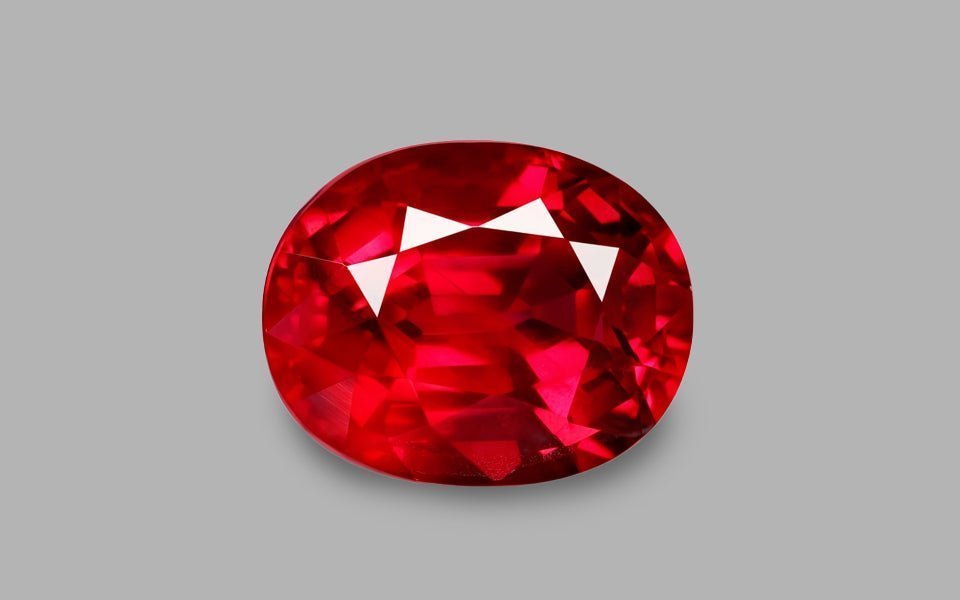
What Makes a Gem Rare? How to Assess Rarity
Rarity is not a synonym for price
The word rare is used freely in the gemstone trade. It can describe a mineral species that occurs in few places, an unusual color, a large stone of fine quality, a documented origin, or simply a seller’s enthusiasm.
Those meanings are not interchangeable.
In a useful gemological and commercial sense, rarity concerns the limited availability of a clearly defined material or combination of properties. Price is a different question. It also depends on appearance, demand, condition, treatment, documentation, the number of interested buyers, and the market at the time of sale.
A material may be genuinely uncommon and still have very little demand. Another gemstone may be widely known as a species but difficult to find in one specific combination of color, transparency, size, and treatment status. The second stone can be more relevant to buyers even though the mineral name itself is familiar.
The first question should therefore never be only whether a gem is rare. It should be which exact property is rare, and how that claim has been supported.
Begin with identity, then examine the combination
Before assessing rarity, establish what the object is. A meaningful description separates:
- the mineral species and, where appropriate, the variety;
- natural material from synthetic material;
- known or detectable treatments from a conclusion that no indications of a specific treatment were found;
- measured properties from trade names and seller descriptions;
- a laboratory opinion on geographic origin from an origin inferred only from appearance.
Rarity usually lies in the combination rather than in one label. A ruby is not rare merely because it is called ruby. A large ruby of attractive color, good transparency, sound cutting, and a documented conclusion of no indications of heating is a much narrower category.
The same principle applies throughout the ruby, sapphire, and emerald markets. Each individual stone must be assessed on its own properties.
Color must be judged within the correct gemstone category
Color is often the most influential quality factor in colored gemstones, but there is no single ideal that applies to every species. Hue, tone, saturation, evenness, transparency, and the effect of the cut all influence the face-up appearance.
The most desirable range for one gemstone may be unsuitable for another. Even within one variety, buyers may value different appearances. A vivid stone is not automatically superior if it is too dark, unevenly colored, poorly cut, or lacking transparency.
Named colors also require care. Terms such as pigeon blood red or royal blue are trade color terms, not universal international grades. Some laboratories apply them according to their own protocols, master stones, and additional criteria. If a report uses such a term, the correct question is which laboratory issued it and what that laboratory means by it.
A seller’s color adjective does not carry the same evidential weight as the findings printed on a specified laboratory report. Neither one, however, determines beauty for every observer.
Size matters only when quality is held constant
Carat weight is easy to compare, which makes it easy to misuse. A larger stone is not automatically rarer or more valuable than a smaller one.
The relationship between size and rarity depends on the material. Some gem species are seldom encountered in fine quality above a modest weight. Others form large crystals more readily. The relevant question is not how large the stone is in isolation, but how often that species is found at that size with comparable color, clarity, treatment status, and cutting quality.
Size can also narrow the buyer pool. Beyond the range commonly used in jewelry, fewer buyers may have a practical use or budget for a stone, even when the specimen is impressive. This is one reason carat weight alone cannot establish either rarity or saleability.
Clarity is species-specific
Colored gemstones should not all be judged against the same clarity expectation. Some materials commonly contain inclusions, while others are more often found clean to the unaided eye. An inclusion can reduce transparency or durability, but it can also support identification or help a laboratory evaluate treatment and origin.
Emerald is a useful example. Natural emeralds commonly contain inclusions and surface-reaching fractures, and fracture filling with oils or other substances is widespread. A transparent emerald with unusually unobtrusive inclusions may be less common, but describing any emerald as flawless without defining the observation method would be unsafe.
The practical questions are:
- Are the inclusions visible without magnification?
- Do they affect transparency or the face-up color?
- Do surface-reaching fractures create a durability concern?
- Has a filler been detected, and how is its extent described on the report?
Clarity should be described in relation to the gemstone, not forced into an unsupported universal scale.
Origin can matter, but the stone still comes first
Certain historic deposits produced material with combinations of appearance and geological features that became important in the trade. Kashmir sapphire is the classic example. The best-known historic workings were intensively productive for only a short period in the 1880s, and later mining was intermittent.
That history helps explain why well-documented stones associated with the historic production receive close attention. It does not mean that every sapphire attributed to Kashmir is fine, nor that a weak stone becomes exceptional because of a locality name.
Geographic origin is also not something that should be assigned from color alone. When an appropriate laboratory offers origin determination, its conclusion is an expert opinion based on comparison with reference data. In some cases the evidence overlaps and the result may be inconclusive.
The report wording matters. So does the quality of the stone in front of you.
Trade names are not always geographic guarantees
Paraiba illustrates why trade terminology and origin must be separated. Paraiba is the trade term used here for copper- and manganese-bearing tourmaline that meets the relevant color and gemological criteria. The name comes from the Brazilian locality where the material was first discovered, but qualifying gemstones may also originate elsewhere.
A Paraiba description therefore does not, by itself, prove Brazilian origin. If country of origin is commercially important to the purchase, it must be addressed by a suitable origin report, and even then a conclusive result may not always be possible.
This distinction protects both beginners and experienced buyers from paying for a geographic implication that the documentation does not support.
Treatment status changes the category, not the whole judgment
Heat treatment is common in ruby and sapphire. For a fine stone, a laboratory conclusion stating that no indications of heating were found may describe a less common treatment status and can be commercially important.
It is still only one part of the assessment.
A stone with no indications of heating may have weak color, poor transparency, an unattractive cut, or significant durability concerns. A well-heated stone may be beautiful, properly disclosed, and suitable for its intended use. Different treatments also have different implications. Routine heating, lattice diffusion, glass filling, and fracture filling should not be collapsed into one vague word such as enhanced.
The buyer needs the exact treatment wording, not an assumption that untreated always means superior.
A laboratory report documents findings, not rarity or price
A report must be read according to its exact type and scope. Depending on the service and the stone, it may record:
- identity and variety;
- whether the material is natural or synthetic;
- weight, measurements, shape, cutting style, and color description;
- detectable treatments;
- an opinion on geographic origin, when requested, supported, and offered for that material.
Major colored-stone reports generally do not provide a universal quality grade. They do not decide whether a gemstone is beautiful, whether its asking price is reasonable, or whether it will be easy to sell.
Documentation can support the facts from which a rarity assessment is made. It does not turn the word rare into a laboratory conclusion unless the report itself expressly says so within a defined service.
This is why the report number, issuing laboratory, date, service type, and exact wording should be checked rather than summarized as certified.
Supply can change
Natural gemstone deposits are not standardized factories. A specific combination of color, size, clarity, and treatment status cannot simply be ordered into existence.
That does not make supply perfectly fixed. New deposits are discovered, old areas can return to production, mining can expand, and new treatment or recovery methods can change what reaches the market. A responsible rarity claim is therefore dated and specific. It describes what is known about a material and its availability, rather than promising that supply can never increase.
Demand can change as well. Fashion, design trends, publicity, collector interest, and the number of active buyers all affect the market. Rarity without demand can leave a gemstone difficult to sell.
Questions to ask before accepting a rarity claim
Before a high-value purchase, ask:
- What exactly is claimed to be rare: species, variety, color, size, origin, treatment status, phenomenon, or a combination?
- Is the description relative to the correct gemstone category?
- Which facts appear on the laboratory report, and which statements come from the seller?
- Does the report include treatment findings and, if relevant, an origin opinion?
- Is the comparison based on stones of similar quality, or only on carat weight?
- Are the trade terms being presented as universal grades when they are not?
- What evidence shows current demand for this exact category?
- What would be required to sell the stone later, and which costs or delays could arise?
What investment quality means at SOSNA Gems
At SOSNA Gems, investment quality is a commercial selection framework. It is not a laboratory grade and it is not a forecast.
The framework is intended to identify stones whose individual combination of quality, documentation, rarity, and market relevance merits closer consideration for a long holding horizon. It cannot remove market risk or predict a future selling price.
Resale may require time and specialist access. A dealer or intermediary may apply a margin, the eventual price may be below the original retail price, and neither the timing nor the completion of a sale can be guaranteed. These are physical objects with limited liquidity, and demand for a particular category can change.
The value of any individual gemstone depends on its own quality, condition, documentation, and the market at the time of sale.
Examine evidence before adjectives
A credible rarity assessment becomes more specific as the value of the purchase rises. It moves from a broad adjective to a chain of questions: what the stone is, what makes this example unusual, which findings are documented, what remains a judgment, and how broad the real market is.
Explore our investment gemstone collection to compare documented stones by their individual characteristics rather than by rarity claims alone.
Frequently asked questions
What makes a gemstone rare?
A gemstone is rare when a clearly defined material or combination of properties is available in limited quantities. The relevant combination may include identity, color, size, clarity, treatment status, origin, and cutting quality. Rarity should always be defined relative to the correct gemstone category.
Does a laboratory report prove that a gemstone is rare?
Not by itself. A laboratory report can document findings such as identity, whether the material is natural or synthetic, detectable treatments, measured characteristics, and sometimes an expert opinion on geographic origin. Rarity is an assessment made from those findings together with quality, availability, and market context.
Does a famous geographic origin make every stone valuable?
No. A respected origin may be relevant for a particular gemstone, but every deposit produces a range of quality. The stone’s color, transparency, cut, condition, treatment status, and documentation still matter, and geographic origin should not be inferred from appearance alone.
Is a gemstone with no treatment automatically rarer or better?
No. Treatment status is one factor. For some fine rubies and sapphires, a report stating that no indications of heating were found can describe a less common category. The stone must still be judged for color, clarity, cut, durability, and overall quality.
Is a larger gemstone always rarer?
No. Size must be considered together with species and quality. Some gemstones are unusual in fine quality above a modest weight, while others naturally form large crystals. A large stone with weak color, poor transparency, or an unattractive cut is not made exceptional by carat weight alone.
Can a genuinely rare gemstone be difficult to sell?
Yes. Rarity does not create demand. A gemstone may have a very small buyer pool, and resale can involve specialist access, intermediary margins, a long search, and a price below the original retail price. The timing and price of a future sale cannot be guaranteed.
Disclaimer
This article is for educational purposes and does not constitute investment advice, a valuation, or a promise of future performance. Gemstones have limited liquidity, their value can decrease, and a sale cannot be guaranteed. Obtain appropriate gemological, legal, tax, and financial advice for your circumstances before making a high-value purchase.