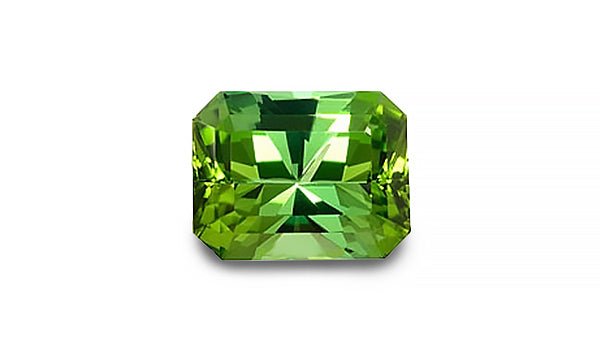
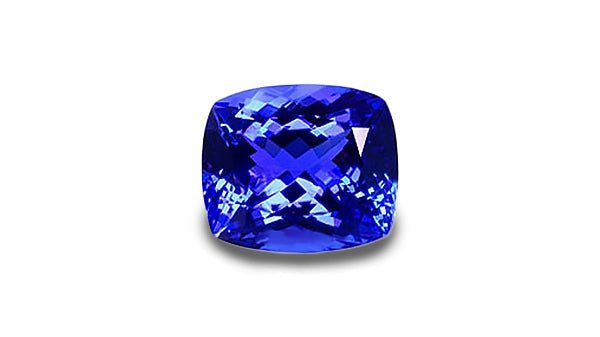
Topaz: The Gem of Purity, Strength, and Radiant Beauty
Introduction
The Red Sea island that gave topaz its name never produced a single topaz. Ancient Topazios, today's Zabargad, mined peridot, and the yellow stones classical authors described under the name almost certainly belonged to other species entirely. Topaz has spent two thousand years being confused with something else, from the peridot of its naming island to the citrine long sold under its name, and even, in one royal case, a crown "diamond" that was topaz all along.
This guide untangles the identities: what topaz actually is, why the gem defined hardness 8 still demands careful handling, what Imperial means and where it comes from, and the full, honest story of how blue topaz, the world's most popular blue gem, gets its color.
What Is Topaz?
Topaz is an aluminum fluorosilicate, Al₂SiO₄(F,OH)₂, crystallizing in the orthorhombic system in pegmatites and high-temperature veins. It serves as the reference mineral for hardness 8 on the Mohs scale, harder than any quartz or beryl, with a refractive index of 1.61 to 1.64 and a bright, sleek luster that polishes beautifully.
One structural trait qualifies the hardness: topaz has perfect basal cleavage, a single built-in plane along which the crystal can split under a sharp knock. Hard and tough are different properties, and topaz is the classic proof: it resists scratches superbly and dislikes impacts. Everything about setting and wearing topaz follows from that sentence.
Its naming history explains a confusion that still trades today. For centuries, "topaz" served as a label for nearly any golden stone, and vast quantities of citrine quartz sold as "Madeira topaz" or "gold topaz" until regulation forced honest names. The two share November as birthstone partly because of that entanglement; our citrine guide tells the other half of the story.
Natural Colors and the Meaning of Imperial
Pure topaz is colorless, and colorless stones are common enough that Victorian jewelers used them as diamond stand-ins. Trace chemistry and crystal defects create the natural palette: golden, sherry brown, pink, violet, and a pale natural blue rare enough that most buyers never encounter it.
At the top of the species stands Imperial topaz, the golden-orange to pinkish-orange variety mined in commercial quantity only around Ouro Preto in Brazil's Minas Gerais. The name has two competing origin stories, one crediting the Russian imperial court and one crediting Brazil's Emperor Dom Pedro II, and neither has been settled; today no official standard governs the term at all. Fine Imperial combines saturated color with real scarcity and holds its own market tier; our dedicated Imperial topaz guide covers it in depth.
The Truth About Blue Topaz
Blue topaz fills jewelry cases worldwide, and nearly none of it left the ground blue. Natural blue topaz exists, but pale and scarce; the saturated blues of commerce are produced by irradiating colorless topaz and then heating it, a two-step process that creates stable, permanent color. Each trade shade has its own recipe:
| Trade name | Color | How it is produced | Worth knowing |
|---|---|---|---|
| Natural blue | Very pale blue | Formed in the earth, untreated | Genuinely rare, collector interest |
| Sky Blue | Light blue | Electron irradiation + heat | Most accessible treated shade |
| Swiss Blue | Bright, vivid blue | Irradiation (typically electron/gamma) + heat | Color entirely induced; "natural Swiss Blue" is a contradiction |
| London Blue | Deep, inky blue | Neutron irradiation in a reactor + heat | US imports require NRC-licensed handling and decay holding periods |
The treatments are stable and safe: irradiated stones are held until residual radioactivity decays below strict regulatory limits before they may be sold, and in the United States, neutron-irradiated material moves only through licensed channels. What the process demands is honesty in labeling. Regulations, including FTC guidance, require irradiated stones to be described as irradiated, and a listing that calls Swiss Blue "natural" misdescribes the single most important fact about the stone. At SOSNA Gems, blue topaz is always sold as what it is: natural topaz with induced color, disclosed in full. The broader principles are covered in our guide to treated versus untreated gemstones.
One more product deserves a plain sentence: "Mystic topaz," with its oil-slick rainbow, is colorless topaz carrying a thin metallic surface coating. The coating can scratch and wear through, and the stone should be bought, priced, and cared for as a coated gem.
Where Topaz Is Mined
Brazil dominates, from the Imperial deposits of Ouro Preto to the giant colorless and blue crystals of Minas Gerais that supply the treatment pipeline. Pakistan's Katlang deposit produces rare natural pink, Russia's Urals hold the historic imperial-pink legacy, Sri Lanka contributes pale and colorless material from its gem gravels, and Nigeria, Mexico, and the United States, including Utah's amber-colored crystals, round out supply.
Giants and Famous Stones
Topaz grows enormous, and museums prove it. The El-Dorado Topaz, at roughly 31,000 carats, ranks among the largest faceted gemstones on Earth; the American Golden Topaz at the Smithsonian weighs 22,892 carats; and the Ostro Stone, 9,381 carats of blue, was cut from a crystal found in Minas Gerais in 1960 by the gem explorer Max Ostro and is displayed in London.
The most instructive famous topaz never carried the name in its glory days. The Braganza, a colorless stone of well over a thousand carats set among the Portuguese crown jewels, was long celebrated as one of the greatest diamonds in existence. Gemology's verdict came later: almost certainly a topaz, and history's most distinguished victim of the species' talent for impersonation.

The 9,381-carat blue topaz "The Ostro Stone," discovered in 1960 in Minas Gerais, Brazil, by gemstone pioneer Max Ostro. Natural History Museum, London.
Judging Quality
In Imperial and pink topaz, color carries nearly everything: saturation, the presence of pink or red flash, and evenness of tone. In treated blues, color is standardized, so value shifts to cut precision, clarity, and size, with prices staying gentle because supply is industrial. Across all colors topaz is expected to be eye-clean, and its generous crystal sizes mean large, clean stones cost far less per carat than in almost any other species, with the sharp exception of fine Imperial, where genuine scarcity rules.
Care: Hard, and Handle with Respect
Hardness 8 protects topaz from scratches in daily wear, and the cleavage plane asks for one habit in return: protect the stone from sharp knocks. Ring settings with protected corners, and removal before sports or heavy work, cover most of the risk.
- Clean with lukewarm water, mild soap, and a soft cloth or brush.
- Avoid ultrasonic and steam cleaners, which can exploit the cleavage.
- Keep some colors, especially brown and irradiated blues, out of prolonged intense sunlight, which can slowly fade them.
- Store topaz separately; it scratches other stones, and diamond scratches it.
For the difference between hardness and toughness in practice, see our gemstone hardness guide.
Why Choose Topaz?
Topaz offers a genuine spread of choices under one name: colorless stones with diamond-era history, treated blues that deliver saturated color in any size at accessible prices, and Imperial material whose rarity competes with far more famous gems. It rewards the buyer who knows which topaz they are buying, and a seller who says so plainly.
That knowledge is the whole game with this species. Two thousand years of mistaken identity end at the moment of honest disclosure.
Explore our selection of natural topaz gemstones, each described with full treatment disclosure, including irradiation where it applies.