Understanding Gemstone Hardness – The Mohs Scale and Jewelry Durability
What Is Gemstone Hardness?
When choosing a gemstone, most people focus on brilliance, rarity, or color. One of the most consequential factors is quietly overlooked: hardness. It determines how well a stone resists scratching, which shapes its durability, its wearability, and how it will look after twenty years on a hand.
In gemology, hardness means one specific thing, resistance to scratching, and it should never be confused with two properties that sound similar:
- Toughness is the ability to resist breaking or chipping.
- Stability is resistance to heat, chemicals, light, and humidity.
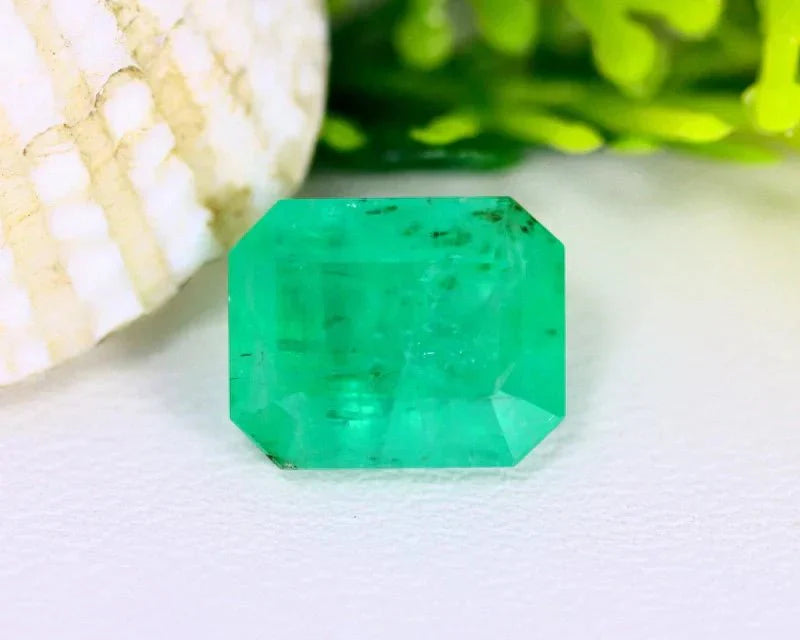
The distinction matters more than it sounds. Topaz rates 8 on the Mohs scale, harder than quartz or beryl, yet its perfect cleavage means a single sharp knock can split it in half. Emerald is hard at 7.5 to 8 and still fractures easily because of its inclusions. Pearl is soft at 2.5 to 4.5 and has been treasured for millennia. Hardness tells you one part of the story, and the rest comes from how the stone is built.
Why Hardness Matters in Everyday Wear
Ordinary environments are harsher than they look. Household dust contains fine quartz particles, which rate 7 on the Mohs scale. Any gemstone softer than quartz will slowly lose its polish simply from being worn, wiped, and handled in a normal home. This single fact explains most of what follows.
- Mohs 8 to 10: diamond, sapphire, ruby, spinel, and alexandrite withstand daily wear and suit engagement rings and heirloom pieces.
- Mohs 7 to 8: tourmaline, garnet, topaz, aquamarine, and morganite work well in regular jewelry, with attention to knocks and settings.
- Below Mohs 7: opal, tanzanite, apatite, sphene, and pearl belong in earrings, pendants, and protective settings rather than daily-wear rings.
Two stones deserve a footnote precisely because their hardness numbers mislead. Topaz, despite its 8, has perfect cleavage and needs a protective setting in a ring. Zircon, at 6.5 to 7.5, is brittle and abrades at its facet edges faster than the number suggests. Hardness sets the floor; structure decides the rest.
The Mohs Scale, and Its One Great Quirk
In 1812, the Viennese mineralogist Friedrich Mohs built a ranking system so simple it has survived two centuries unchanged. He arranged ten reference minerals from talc at 1 to diamond at 10, and defined the rule that governs the whole scale: a mineral scratches anything softer than itself and is scratched by anything harder. Minerals of equal hardness do not scratch each other. Quartz at 7 scratches fluorite at 4 and is scratched by topaz at 8.
The quirk is that the Mohs scale is relative, not proportional. It tells you the order, and nothing about the distance between the steps. Those distances turn out to be wildly uneven, and the absolute scale developed by August Rosiwal shows just how uneven:
| Mineral | Mohs (relative) | Rosiwal (absolute, approx.) |
|---|---|---|
| Quartz | 7 | 100 |
| Topaz | 8 | 175 |
| Corundum (sapphire, ruby) | 9 | 1,000 |
| Diamond | 10 | 140,000 |
Read that last row again. The single step from corundum to diamond, which looks like nine to ten on a tidy scale, represents a gap of well over a hundredfold in real hardness. Diamond stands so far above everything else that the scale it sits on almost misrepresents it, and this is why nothing but a diamond scratches a diamond, and why sapphire, for all its excellence, sits in a different world from the stone one number above it.
Hardness Is Not the Same in Every Direction
A second complication rarely reaches buyers, and it is one of the strangest facts in gemology: some minerals have different hardness depending on which way you scratch them.
Kyanite is the textbook case. Along the length of its bladed crystals it rates about 4.5, soft enough to scratch with a knife. Across them, it rates 6 to 7. The mineral was once called disthene, from the Greek for "two strengths," precisely because of this behavior, and a cutter who ignores the orientation will ruin the stone.
Diamond does the same thing, in a subtler way. Its hardness varies measurably between crystal faces and directions, and that variation is the only reason diamond cutting is possible at all: a diamond can be polished by diamond powder because some directions are harder than others. The hardest natural substance is cut using itself, exploiting its own internal inconsistency.
Scratch Hardness and Cutting Resistance
Gemologists distinguish scratch hardness, which the Mohs scale measures, from cutting resistance, which is what a lapidary actually fights on the wheel. The two correlate loosely and diverge in practice.
Harder stones take a better polish, which is why corundum and diamond finish with a mirror surface that softer species cannot match. Softer stones, meanwhile, demand more skill rather than less: cutting them well is an art mastered by a small number of specialists, because the same softness that makes them easy to shape makes them easy to overheat, chip, and destroy. Sphalerite, at hardness 3.5 to 4 with perfect cleavage in six directions, is the extreme example, and our article on the art of the gemstone cut explains how these constraints shape every finished gem.
Testing Hardness: What Scratches What
The classic field references still work, and every gemologist knows them:
- Fingernail (about 2.5) scratches talc and gypsum.
- Copper coin (about 3) scratches calcite.
- Knife blade or window glass (about 5.5) scratches apatite and anything softer.
- Steel file (about 6.5) scratches orthoclase and below.
- Quartz (7) scratches window glass, which is the classic quick test.
A warning belongs beside that list, and it is not a formality. Never perform a scratch test on a cut gemstone. The test damages the stone, it is too imprecise for reliable identification, and modern gemology has abandoned it for exactly those reasons: refractive index, density, and spectroscopy identify a gem without touching its surface. If a seller offers to prove a stone's identity by scratching it, that tells you more about the seller than about the stone.
Choosing a Gem for Your Lifestyle
- Engagement rings and daily wear: diamond, sapphire, ruby, spinel, alexandrite. Hardness 8 and above, and spinel and corundum have no cleavage planes at all.
- Occasional rings and dress jewelry: tourmaline, garnet, aquamarine, morganite, topaz in protective settings.
- Earrings and pendants: tanzanite, zircon, opal, sphene, apatite, pearl. Protected from impact by their position rather than by their hardness.
- Display and collection: sphalerite, fluorite, and other soft rarities that reward a cabinet more than a hand.
A balanced collection usually holds both: hard stones for the pieces worn without thinking, and softer rarities chosen for what only they can do.
Care and Cleaning by Hardness
- Mohs 9 to 10 (diamond, sapphire, ruby): warm water, mild soap, soft brush. Ultrasonic cleaning is generally safe for clean, untreated stones.
- Mohs 7 to 8 (spinel, topaz, quartz, emerald, aquamarine): warm water and mild soap only. Never use ultrasonic cleaners on emerald, whose oiled fissures can be emptied, or on topaz, whose cleavage they can exploit.
- Mohs 6 and below (tanzanite, opal, sphene, apatite, pearl, sphalerite): hand cleaning only, with a soft damp cloth. No ultrasonic, no steam, no chemicals. Store separately from harder stones, and keep pearls away from perfume and cosmetics.
Our complete gemstone care guide covers wear, cleaning, and storage in detail, including what to do when a softer stone loses its polish.
Complete Mohs Hardness Table of Gemstones
The table below lists more than 150 gemstones by hardness, from diamond at the top of the scale to amber and ulexite at the bottom. Use it as a working reference when choosing stones for everyday jewelry, occasional pieces, or a collection. Stones we carry are linked to their collections.
| Gemstone | Name | Mohs Hardness |
|---|---|---|
 |
Diamond | 10 |
 |
Ruby | 9 |
 |
Star Ruby | 9 |
 |
Sapphire | 9 |
 |
Star Sapphire | 9 |
 |
Alexandrite | 8.5 |
 |
Alexandrite Cat's Eye | 8.5 |
 |
Chrysoberyl | 8.5 |
 |
Chrysoberyl Cat's Eye | 8.5 |
 |
Vanadium Chrysoberyl | 8.5 |
 |
Taaffeite | 8-8.5 |
 |
Spinel | 8 |
 |
Topaz | 8 |
 |
Imperial Topaz | 8 |
 |
Pezzottaite | 8 |
 |
Emerald | 7.5-8 |
 |
Enstatite | 7.5-8 |
 |
Aquamarine | 7.5-8 |
 |
Morganite | 7.5-8 |
 |
Goshenite Beryl | 7.5-8 |
 |
Golden Beryl (Heliodor) | 7.5-8 |
| Painite | 8 | |
| Phenakite | 7.5-8 | |
| Red Beryl (Bixbite) | 7.5-8 | |
| Andalusite | 7.5 | |
| Euclase | 7.5 | |
| Grandidierite | 7-7.5 | |
| Hambergite | 7.5 | |
| Dumortierite | 7-8.5 | |
| Almandine Garnet | 6.5-7.5 | |
| Danburite | 7-7.5 | |
| Iolite (Cordierite) | 7-7.5 | |
| Pyrope Garnet | 6.5-7.5 | |
| Spessartine Garnet | 6.5-7.5 | |
| Rhodolite Garnet | 6.5-7.5 | |
| Color-Change Garnet | 7-7.5 | |
| Chrome Tourmaline | 7-7.5 | |
| Malaia Garnet | 7-7.5 | |
| Paraiba Tourmaline | 7-7.5 | |
| Rubellite Tourmaline | 7-7.5 | |
| Tourmaline | 7-7.5 | |
| Uvarovite Garnet | 6.5-7.5 | |
| Amethyst | 7 | |
| Aventurine | 7 | |
| Ametrine | 7 | |
| Citrine | 7 | |
| Gem Silica | 7 | |
| Kornerupine | 7 | |
| Rock Crystal | 7 | |
| Rose Quartz | 7 | |
| Smoky Quartz | 7 | |
| Jeremejevite | 6.5-7.5 | |
| Sillimanite | 6.5-7.5 | |
| Zircon | 6.5-7.5 | |
| Agate | 6.5-7 | |
| Axinite | 6.5-7 | |
| Bloodstone | 6.5-7 | |
| Carnelian | 6.5-7 | |
| Chalcedony | 6.5-7 | |
| Chrome Chalcedony | 6.5-7 | |
| Chrysoprase | 6.5-7 | |
| Demantoid Garnet | 6.5-7 | |
| Diaspore | 6.5-7 | |
| Grossular Garnet | 6.5-7 | |
| Hessonite Garnet | 6.5-7 | |
| Hiddenite | 6.5-7 | |
| Jadeite Jade | 6.5-7 | |
| Jasper | 6.5-7 | |
| Mali Garnet | 6.5-7 | |
| Kunzite | 6.5-7 | |
| Leuco Garnet | 6.5-7 | |
| Onyx | 6.5-7 | |
| Peridot | 6.5-7 | |
| Serendibite | 6.5-7 | |
| Sinhalite | 6.5-7 | |
| Spodumene | 6.5-7 | |
| Tsavorite Garnet | 6.5-7 | |
| Idocrase (Vesuvianite) | 6.5 | |
| Tanzanite | 6.5-7 | |
| Cassiterite | 6-7 | |
| Epidote | 6-7 | |
| Maw-Sit-Sit | 6-7 | |
| Unakite | 6-7 | |
| Amazonite | 6-6.5 | |
| Andesine | 6-6.5 | |
| Oligoclase | 6-6.5 | |
| Benitoite | 6-6.5 | |
| Labradorite | 6-6.5 | |
| Moonstone | 6-6.5 | |
| Nephrite Jade | 6-6.5 | |
| Orthoclase | 6-6.5 | |
| Petalite | 6-6.5 | |
| Prehnite | 6-6.5 | |
| Scheelite | 6-6.5 | |
| Sugilite | 6-6.5 | |
| Sunstone | 6-6.5 | |
| Zoisite | 6-6.5 | |
| Amblygonite | 6 | |
| Clinohumite | 6 | |
| Hematite | 5.5-6.5 | |
| Mexican Fire Opal | 5.5-6.5 | |
| Opal | 5.5-6.5 | |
| Rhodonite | 5.5-6.5 | |
| Actinolite | 5.5-6 | |
| Hackmanite | 5.5-6 | |
| Hauyne | 5.5-6 | |
| Scapolite | 5.5-6 | |
| Sodalite | 5.5-6 | |
| Moldavite | 5.5 | |
| Brazilianite | 5.5 | |
| Diopside | 5-6 | |
| Chrome Diopside | 5-6 | |
| Lapis Lazuli | 5-6 | |
| Poudretteite | 5-6 | |
| Turquoise | 5-6 | |
| Datolite | 5-5.5 | |
| Eudialyte | 5-5.5 | |
| Obsidian | 5-5.5 | |
| Sphene (Titanite) | 5-5.5 | |
| Apatite | 5 | |
| Cat's Eye Apatite | 5 | |
| Dioptase | 5 | |
| Hemimorphite | 5 | |
| Smithsonite | 5 | |
| Charoite | 4.5-5 | |
| Larimar | 4.5-5 | |
| Kyanite | 4-7 | |
| Ammolite (Korite) | 4 | |
| Fluorite | 4 | |
| Rhodochrosite | 4 | |
| Aragonite | 3.5-4 | |
| Azurite | 3.5-4 | |
| Cuprite | 3.5-4 | |
| Malachite | 3.5-4 | |
| Sphalerite | 3.5-4 | |
| Coral | 3-4 | |
| Barite | 3-3.5 | |
| Celestine | 3-3.5 | |
| Cerussite | 3-3.5 | |
| Howlite | 3-3.5 | |
| Calcite | 3 | |
| Pearl | 2.5-4.5 | |
| Jet | 2.5-4 | |
| Lepidolite | 2.5-3 | |
| Chrysocolla | 2-4 | |
| Amber | 2-2.5 | |
| Cinnabar | 2-2.5 | |
 |
Ulexite | 2-2.5 |
Frequently Asked Questions About Gemstone Hardness
Which gemstone is the hardest?
Diamond, at 10 on the Mohs scale, the hardest natural material known. The scale is ordinal rather than proportional, and diamond is several times harder than corundum, the mineral one step below it.
What is the second hardest gemstone?
Corundum, at 9, which produces both sapphire and ruby. Nothing but diamond scratches it in ordinary use, which is why sapphire and ruby are ideal for daily-wear rings.
Is hardness the same as durability?
No. Hardness is resistance to scratching only. Durability also depends on toughness, the resistance to chipping and breaking, and stability, the resistance to heat, chemicals, and light. Topaz rates 8 yet splits along its cleavage plane under a sharp knock.
Why do softer gemstones lose their polish over time?
Household dust contains fine quartz particles, which rate 7 on the Mohs scale. Any stone softer than quartz gradually abrades from ordinary wear and wiping. This is why opal, tanzanite, apatite, and sphene suit earrings and pendants better than daily-wear rings.
Is tanzanite suitable for an engagement ring?
Only with care. Tanzanite rates 6 to 7 on the Mohs scale and has perfect cleavage in one direction, so it needs a protective setting and should come off before sport or housework. Earrings and pendants suit it far better.
Which gemstones are best for everyday rings?
Diamond, sapphire, ruby, and spinel. All rate 8 or higher, and spinel and corundum have no cleavage planes, which makes them tough as well as hard. Alexandrite at 8.5 is equally suitable where budget allows.
Is diamond really only one step harder than sapphire?
On the Mohs scale, yes, but the scale is relative rather than proportional. Absolute hardness measurements place corundum at roughly 1,000 and diamond at around 140,000 on the same reference, a gap of well over a hundredfold. Diamond stands far further above sapphire than the numbers 9 and 10 suggest.
Can a gemstone have different hardness in different directions?
Yes. Kyanite rates about 4.5 along its crystals and 6 to 7 across them, which earned it the old name disthene, meaning two strengths. Diamond also varies between crystal directions, and that variation is what makes diamond cutting possible: diamond is polished with diamond powder because some directions are harder than others.
Should I scratch a gemstone to test it?
Never on a cut stone. The test damages the surface, it is too imprecise for reliable identification, and modern gemology identifies gems without touching them, using refractive index, density, and spectroscopy. A seller who offers to prove a stone by scratching it is telling you something about the seller.
Can a scratched gemstone be repolished?
Usually yes. A professional cutter can restore the surface and brilliance of a dulled stone, though the process removes a small amount of material and slightly reduces carat weight. Repolishing is routine for softer stones such as tanzanite, sphene, and opal.
Explore our collection of natural gemstones, each described with full treatment disclosure and independent certification where the value warrants it.