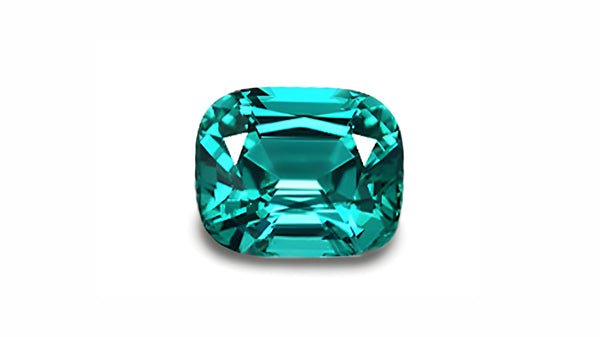
Amethyst: The Gem of Royalty, Mysticism, and Spiritual Harmony
Amethyst is the only famous gemstone that was ever demoted. For most of recorded history it sat beside ruby, sapphire, and emerald in royal treasuries and church regalia, priced accordingly, until the discovery of enormous Brazilian deposits in the nineteenth century flooded the market and changed its fortunes within a generation. The stone itself never changed; only its scarcity did. That story explains almost everything about amethyst today, including why a gem of genuinely royal pedigree is now the most attainable of the great colored stones.
What Amethyst Is
Amethyst is the purple variety of quartz, the most abundant gem mineral in the earth's crust, and its color is a small miracle of geology. Traces of iron sit inside the crystal, and natural radiation from surrounding rocks, acting over geological time, transforms those iron atoms into the color centers that absorb light and leave purple behind. No pigment, no coating: the color is a radiation record written in iron.
- Mineral: quartz, SiO2
- Color: lilac through violet to deep purple, often zoned
- Mohs hardness: 7
- Refractive index: 1.544 to 1.553
- Specific gravity: approximately 2.66
- Sources: Brazil, Uruguay, Zambia, Madagascar, historically the Russian Urals
The same chemistry hides a family secret. Heat an amethyst and the iron changes state, the purple fades, and the stone turns golden: citrine. The two gems are the same crystal in different oxidation states, and in fact most commercial citrine on the market began its life as amethyst in an oven. Where nature performed both states in a single crystal, the result is ametrine, purple and gold sharing one stone, and heating certain amethyst produces the leek-green quartz sold as prasiolite. Few gem families are this openly interchangeable, and understanding it protects a buyer across all three names.
Color: From Rose de France to Deep Siberian
Amethyst runs from the palest lilac to a purple so deep it borders on black, and the market has names for both ends. The delicate pastel stones beloved of Victorian jewelers trade as Rose de France, attractive and inexpensive. At the other end sits the trade's ideal, historically called Deep Siberian after the famed Ural material: a strong purple primary hue of roughly 75 to 80 percent, a blue secondary, and red flashes that appear under warm light. Those red glints are the signature of top amethyst, and stones that show them command the real prices in the category.
Two faults matter. Color zoning, angular bands of stronger and weaker purple, is common in amethyst and well-cut stones hide it face-up; visible zoning in the face of a faceted stone is a defect. And over-dark stones trade richness for life, turning nearly black indoors. As everywhere in colored stones, judge the color in ordinary room light, where the gem will actually live.
A History Written in Wine and Purple
The name comes from the Greek amethystos, "not drunk," and the ancients took the idea literally: Greeks and Romans drank from amethyst vessels in the belief that the stone protected them from intoxication. Pale purple wine cut with water and viewed through purple stone may have helped the legend along.
The famous myth attached to the name deserves a correction that most retellings skip. The story of the maiden Amethyst, saved from Bacchus by the goddess Diana and turned to crystal, then stained purple by the god's remorseful wine, is routinely presented as ancient Greek mythology. It is nothing of the sort: the tale was composed by the French Renaissance poet Remy Belleau in 1576. The ancient world gave amethyst its name and its sobriety legend; the romance is a much later invention, and knowing the difference is the kind of detail that separates a story told well from a story merely repeated.
What is genuinely ancient is the stone's rank. Egyptians carved amethyst amulets and intaglios, amethyst beads have been found in Anglo-Saxon graves, and purple's association with rank made the gem a natural companion of power. The Catholic Church adopted it for centuries as the stone of bishops' rings, a tradition tied to spiritual sobriety and humility, and it appears throughout European crown jewels. Catherine the Great was famously devoted to Ural amethysts, whose deep color held up even in candlelight and gave the Siberian grade its name. In Tibetan tradition the stone is held sacred to Buddha, and rosaries are fashioned from it.
Folk medicine kept its own uses. In European folk healing, amethyst was placed under the pillow for calm sleep, worn for clarity of mind, and prescribed, unsurprisingly, against drunkenness; later traditions associated it with serenity and balance. These uses belong to cultural history rather than to medicine, and they are told here as the lore they are, but they explain why the stone has never lost its reputation as the calm, contemplative member of the gem world. Amethyst is also the birthstone of February and the traditional gem of the sixth wedding anniversary, as covered in our guide to birthstones.

This ancient necklace dates to 2000 BCE. An inscription on the center stone is a South Arabian script from the 8th century BCE. - From "Gems and Gemstones: Timeless Natural Beauty of the Mineral World" by Lance Grande and Allison Augustyn, 2009, University of Chicago Press.
Where Amethyst Comes From
Amethyst grows most spectacularly inside geodes, hollow pockets in volcanic rock lined with crystals, and southern Brazil and neighboring Uruguay host geodes of legendary size. The general trade wisdom holds: Brazil supplies quantity, often in lighter tones and generous sizes; Uruguay produces some of the deepest, most saturated purple, though frequently with inclusions; Zambia and other African sources yield intensely colored material in smaller sizes, often with a violet-blue character; Madagascar contributes fine stones across the range. The historic Russian Urals material that set the Siberian standard is today more a grade name than a source.
Unlike ruby or sapphire, amethyst carries no meaningful origin premium. Laboratories rarely certify amethyst origin and the market does not pay for it; color quality decides everything, from whichever mine it came. The monuments of the category are geological rather than commercial: the Empress of Uruguay, the largest known amethyst geode, stands over three meters tall, weighs two and a half tons, and holds tens of thousands of deep purple crystals in the Crystal Caves museum in Atherton, Australia.

The Empress of Uruguay: The Largest Amethyst Geode
The Great Devaluation, and What It Means for Buyers
The nineteenth-century Brazilian discoveries are the hinge of amethyst's story. A famous illustration: the amethyst bracelet of Queen Charlotte of England, valued at a reported two thousand pounds sterling at the start of the 1700s, was estimated two centuries later at a hundred. Nothing about the bracelet had changed; the world had simply found more amethyst.
For today's buyer this history is good news told honestly. Amethyst offers genuinely royal color at approachable prices because supply is generous, and its quality ladder still functions: pale, zoned, or over-dark material is cheap, while large, clean stones of deep Siberian-grade color with red flashes remain uncommon and are priced with respect. Affordability in amethyst is a fact of geology, and it takes nothing away from a fine stone's beauty.
Synthetic Amethyst: The Quiet Complication
The one modern caution in this category is invisible. Synthetic amethyst has been grown hydrothermally on an industrial scale since the 1970s, it is chemically and visually identical to natural stone, and separating the two is difficult even for laboratories, which rely on subtleties such as twinning structures. Synthetic material is widespread in inexpensive commercial jewelry, where testing would cost more than the stone.
The practical rule follows the price. For ordinary jewelry amethyst, the question is academic. For a large, fine, expensive stone, a laboratory report confirming natural origin is worth its fee, and a seller of fine amethyst should offer that documentation without being pushed. The distinction between grown and formed, and why it governs value, is explained in our guide to natural versus lab-grown stones.
Treatment, Buying, and Care
Amethyst's treatment story is short. Heating lightens over-dark stones, and stronger heating converts amethyst to citrine or, for some material, to green prasiolite; any treatment must be disclosed, as covered in treated versus untreated gemstones. Most amethyst sold as amethyst is untreated.
Buying well means putting color first: a deep, even purple with red flashes, no visible zoning face-up, and life that survives ordinary indoor light. Clarity standards are strict here, because quartz is plentiful; a faceted amethyst should be eye-clean without excuses. Cut quality is where inexpensive material either shines or dies, and amethyst rewards precision cutting with brilliance far above its price.
Care is simple with one exception. Warm water, mild soap, and a soft brush handle cleaning, and at hardness 7 the stone suits everyday jewelry, though it should be stored apart from harder gems that can scratch it. The exception is light: prolonged direct sunlight can slowly fade amethyst's color, so a display window in full sun is the one home this gem should refuse.
Explore our amethyst collection, where the gem's quartz siblings, including prasiolite, occasionally appear alongside it.
Frequently Asked Questions
Why is amethyst so affordable?
Because the nineteenth-century discovery of vast Brazilian and Uruguayan deposits transformed a royal rarity into an abundant gem. The quality ladder still applies: large, clean stones with deep color and red flashes remain uncommon and command real prices.
What is the most valuable amethyst color?
A strong purple of roughly 75 to 80 percent primary hue with blue secondary color and red flashes under warm light, historically called Deep Siberian. Over-dark stones that turn black indoors and pale or visibly zoned stones sit far lower.
What is the difference between amethyst and citrine?
They are the same mineral, quartz colored by iron, in different oxidation states. Heating amethyst turns it golden, and most commercial citrine is in fact heated amethyst. Ametrine is a single crystal containing both colors.
Is synthetic amethyst common?
Yes. Hydrothermal synthetic amethyst has been mass-produced since the 1970s and is difficult to distinguish from natural stone even in laboratories. For inexpensive jewelry the question is academic; for large, fine stones a laboratory report confirming natural origin is worthwhile.
Does amethyst fade?
Prolonged exposure to direct sunlight can slowly fade the color. Normal wear is harmless; long-term display in full sun is what to avoid.
What does the name amethyst mean?
It comes from the Greek amethystos, "not drunk." Greeks and Romans drank from amethyst vessels believing the stone prevented intoxication, and folk tradition later prescribed it for sobriety, calm sleep, and clarity of mind.
Is the Greek myth about Amethyst and Dionysus real mythology?
No. The tale of the maiden turned to crystal and stained by the god's wine was written by the French poet Remy Belleau in 1576. The genuinely ancient elements are the name and the sobriety belief; the romance is Renaissance poetry.
Which month is amethyst the birthstone for?
February. Amethyst is also the traditional gemstone of the sixth wedding anniversary.