Apatite: The Vibrant Gemstone of Energy and Creativity
Introduction
When mineralogists in the late 18th century kept misidentifying a single mineral as tourmaline, peridot, beryl, and half a dozen other stones, they eventually named it after the confusion itself. Apatite comes from the Greek apatáō, "to deceive," because it so convincingly imitates gems far more valuable than itself. That talent for deception works in the collector's favor: apatite offers neon-blue brilliance at a fraction of what the stones it mimics command.
This guide explains what apatite actually is, why its color varies so widely, where the finest material comes from, and how to evaluate and care for a stone whose greatest strength and greatest limitation are the same trait: softness.
What Is Apatite?
Apatite is not a single mineral but a group of phosphate minerals sharing the same basic structure, with calcium phosphate as the core. Its most common natural form is fluorapatite. The same mineral family that produces gem crystals also builds the mineral component of vertebrate bone and tooth enamel, which is why the name appears in both jewelry cases and biology textbooks.
Gem-quality apatite crystallizes in the hexagonal system, forming six-sided prismatic crystals. It has a refractive index between roughly 1.63 and 1.65, which gives well-cut stones a bright, glassy sparkle. Its chemistry allows a wide range of trace elements to enter the crystal, and that openness is exactly what produces its unusual span of colors.
The mineral's reach extends well beyond Earth. When NASA's rovers analyzed Martian rock, apatite was among the minerals they identified, and its water content has helped geologists estimate how much water once existed on Mars. The same crystal that sits in a collector's case is, in a sense, a record-keeper of planetary history.
Why Apatite Comes in So Many Colors
Few gemstones cover as much of the spectrum as apatite. The cause lies in its accommodating crystal structure, which readily hosts trace elements such as manganese, iron, and rare-earth elements. Different impurities absorb different wavelengths of light, and small shifts in chemistry produce large shifts in color.
The blue-to-green range, the most commercially important, is driven largely by trace amounts of rare-earth elements and manganese. Yellow-to-golden material owes its warmth to a different balance of the same elements. Because the coloring agents vary from deposit to deposit, apatite's color often points toward its geographic origin.
The Most Sought-After Colors
Not all apatite colors are valued equally. In descending order of typical desirability:
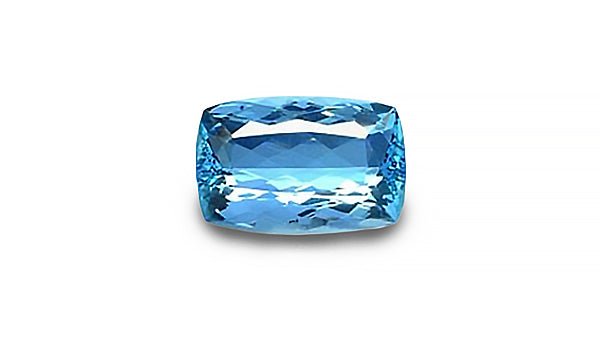
- Neon blue-green ("Paraíba-like"): the most prized, an electric, saturated blue that echoes the far costlier Paraíba tourmaline.
- Vivid green: often with a bluish or yellowish undertone, sometimes showing faint fluorescence.
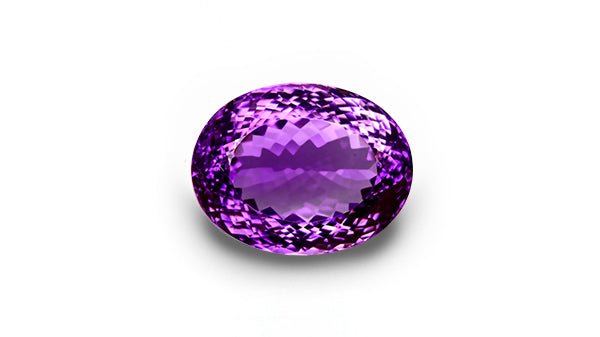
- Violet to purple: genuinely scarce, admired for its depth.
- Golden yellow: warm and bright, occasionally mistaken for citrine or golden beryl.
Across every color, the rule is consistent: the more saturated and evenly distributed the hue, the higher the value.
Where Apatite Is Mined
Apatite occurs on every continent as an industrial mineral, but gem-quality crystals are far scarcer and concentrate in a handful of deposits. Origin matters here less for prestige than for what it tells you about probable color.
Brazil and Madagascar
Brazil is the classic source of the electric neon-blue material that most often gets confused with Paraíba tourmaline. Madagascar produces a broad range, including strong blues and greens with excellent transparency, and is one of the more reliable modern sources for cutting-grade rough.
Mexico and Canada
These deposits are known for bright golden-yellow apatite with high clarity. Mexican material in particular has supplied much of the warm-toned apatite seen in collector cases.
Russia, Myanmar, Sri Lanka and India
The Russian deposits of the Kola Peninsula and the Ural Mountains are famous for green crystals, some showing a soft fluorescence. Myanmar, Sri Lanka, and India contribute smaller quantities of violet, blue-green, and multicolored stones, rounding out apatite's remarkable palette.
Quality Factors: How to Evaluate Apatite
Apatite is judged on the same four foundations as most colored stones, but the weighting is distinct because of its physical properties.
Color
Color is the dominant value driver. Look for saturation and evenness. A washed-out or grayish blue is common and inexpensive; a clean, electric blue-green is what commands attention. Neither too dark nor too pale reads as ideal.
Clarity
Better apatite is transparent and eye-clean. Because the mineral often forms with inclusions, clean material in larger sizes becomes disproportionately scarce. Read more about how inclusions are assessed in our guide to gemstone clarity grades.
Cut
Apatite's brightness rewards precise cutting. Oval, round, pear, and emerald cuts are all common. A good cut returns light evenly and avoids windowing; the stone's refractive index means a well-proportioned apatite genuinely sparkles.
Carat Weight
Small apatite is readily available. Clean, saturated stones above a few carats are far less so, and price rises accordingly with size when color and clarity hold.
The Critical Limitation: Hardness
Every discussion of apatite must return to one number. On the Mohs scale, apatite sits at 5, and it is in fact the reference mineral for that point on the scale. This is soft for a gemstone. Quartz, at 7, is harder, which means ordinary household dust, containing fine quartz particles, can scratch an apatite over time.
This single fact should govern how apatite is used and worn. It is an outstanding stone for earrings, pendants, and brooches, where it faces little abrasion. In rings, it needs a protective setting such as a bezel and should be treated as an occasional piece rather than a daily one. To place apatite in context against tougher stones, see our gemstone hardness guide.
Apatite Compared to the Stones It Imitates
Apatite's reputation as a "deceiver" is best understood by placing it beside its most frequent lookalikes.
| Stone | Mohs Hardness | Relative Cost | Distinguishing Trait |
|---|---|---|---|
| Apatite | 5 | Accessible | Bright color, but soft |
| Paraíba Tourmaline | 7–7.5 | Very high | Copper-bearing neon, far tougher |
| Peridot | 6.5–7 | Moderate | Yellow-green, doubled facets |
| Beryl (aquamarine) | 7.5–8 | Moderate–high | Cooler blue, much harder |
The comparison clarifies apatite's honest position: it delivers comparable visual impact to these stones at a lower price, in exchange for lower durability. For a collector who values color and rarity of hue over everyday wearability, that is a fair trade.
Is Apatite Treated?
Most gem apatite reaches the market untreated, its color entirely natural. Some blue and green material may be heated to improve or stabilize color, a common and generally accepted practice. Because treatment status affects both value and disclosure obligations, it should always be stated by the seller. Our guide to treated versus untreated gemstones explains why this distinction matters across the gem world.
Caring for Apatite
Apatite's softness makes care straightforward but non-negotiable.
- Clean only with lukewarm water, mild soap, and a soft cloth.
- Never use ultrasonic or steam cleaners, which can fracture the stone.
- Store apatite separately, away from harder gems such as sapphire and ruby that will scratch it.
- Keep it out of prolonged direct sunlight, which can lighten some colors over time.
- Remove apatite jewelry before physical activity or household work.
A Stone of Symbolism and Vision
Apatite has long carried associations with insight and clarity of thought. Blue apatite in particular is linked in lapidary tradition to focus and communication. These meanings belong to cultural and historical lore rather than to any established physical effect, but they add to the character of a stone whose name is itself a story about perception and mistaken identity.
Why Choose Apatite?
Apatite earns its place in a collection on clear terms. It offers one of the widest color ranges in the mineral kingdom, genuine neon blues that rival stones many times its price, and strong optical brilliance when well cut. Its limitation is equally clear: at hardness 5, it is a stone to be worn thoughtfully and set protectively.
Understood correctly, apatite is a specialist's gem. It rewards the buyer who wants unusual color and is willing to give the stone the care its softness demands.
Explore our selection of natural apatite gemstones to see the range of color and clarity in certified stones.