Natural vs Lab-Grown: Same Stone, Different History
The Honest Starting Point: A Lab-Grown Sapphire Is a Real Sapphire
Most articles on this subject begin by implying that laboratory-grown gemstones are fake. They are not. A lab-grown sapphire has the same chemistry as a mined sapphire, the same crystal structure, the same hardness of 9, the same refractive index, and the same blue. Under a jeweler's loupe, an expert can miss the difference. It is a real sapphire, grown quickly instead of slowly.
Everything that matters about the choice follows from accepting that fact first. A synthetic stone is not an imitation of a gemstone; it is the same substance with a different history. The question worth asking is what that history is worth, and the honest answer involves geology, economics, and disclosure rather than sentiment.
SOSNA Gems sells only natural stones. This article explains why, and it explains the case for lab-grown material fairly, because a buyer who understands both makes a better decision than one who has been sold a slogan.
The Three Categories: Natural, Synthetic, Simulant
The single most useful distinction in the entire subject is between synthetics and simulants, and almost every buyer confuses them.
| Category | What it is | Example | Price level |
|---|---|---|---|
| Natural | Formed in the earth over geological time | Mined sapphire | Full market price, set by rarity and quality |
| Synthetic (lab-grown) | Same chemistry and structure, grown in weeks or months | Lab-grown sapphire | A small fraction of natural |
| Simulant (imitation) | Different material that merely looks similar | Cubic zirconia, glass, synthetic spinel sold as "aquamarine" | Minimal |
A synthetic ruby is a ruby. A cubic zirconia sold as a diamond is not a diamond at all. Vintage costume jewelry is full of synthetic spinel imitating aquamarine, sapphire, and zircon, which is a simulant use of a synthetic material, and it fools far more people than laboratory-grown corundum ever has. Our guide to what a natural gemstone is sets out all four categories, assembled stones included.
Terminology on the market is deliberately slippery. "Created," "cultured," "grown," and "engineered" all mean synthetic. Anything that avoids the word natural without saying synthetic deserves a direct question.
How Lab-Grown Gemstones Are Made
Laboratory growth is older than most buyers assume, and the methods leave fingerprints.
Flame fusion (Verneuil), published in 1902, melts powdered alumina in a flame and drips it onto a rotating pedestal to build a synthetic corundum boule. It is cheap, fast, and responsible for a century of synthetic sapphire and ruby in class rings and watch crystals. It also leaves curved growth lines, a signature never produced by nature, which crystallizes in straight, angular zones.
Flux growth dissolves the ingredients in a molten solvent and lets crystals form slowly over months. The results are far more convincing and can contain flux inclusions that mimic natural fingerprints.
Hydrothermal growth imitates nature more closely still, using hot water under pressure, and produces the most deceptive synthetic emeralds and quartz.
CVD and HPHT, chemical vapor deposition and high-pressure high-temperature, grow diamonds and have taken a substantial share of the diamond jewelry market over the past decade, particularly in engagement rings.
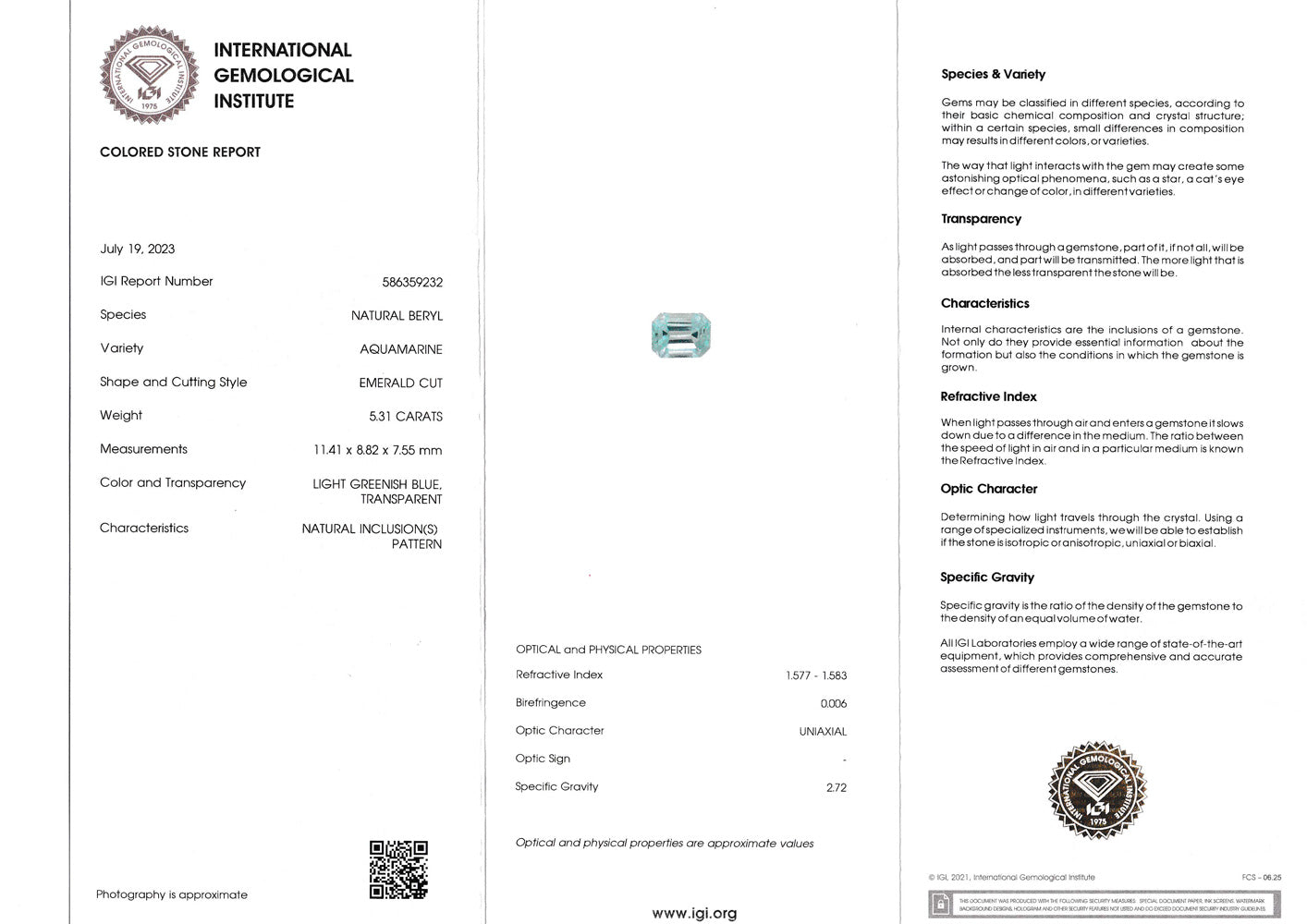
The important consequence is practical: the better the growth method, the more sophisticated the equipment required to detect it. Curved striae from a Verneuil ruby are visible under magnification. A modern hydrothermal emerald can require spectroscopy in a proper laboratory. This is precisely why certification matters, why the choice of laboratory matters, and why the first line every buyer should read on a report is the word natural.
How Laboratories Tell Them Apart
Gemologists identify synthetics by reading growth history rather than by testing chemistry, because the chemistry is identical.
Natural crystals grow slowly in changing conditions and record that turbulence: angular color zoning, mineral inclusions of other species, fluid-filled cavities, healed fractures that look like fingerprints. Synthetic crystals grow fast in a stable, clean environment and show its signature: curved growth lines, gas bubbles, unnaturally uniform color, flux residue, and in some cases the absence of any inclusion at all, which is itself suspicious. Trace element analysis and spectroscopy settle any remaining doubt in a modern laboratory. How those features are weighed species by species is covered in our guide to clarity grades.
The reason this needs saying plainly: no visual test at home is reliable. Fine synthetics look better than most natural stones, precisely because they lack the flaws nature gives. A gem that seems too clean, too saturated, and too cheap deserves suspicion rather than celebration.
The Honest Case for Lab-Grown Stones
Synthetic gemstones do several things well, and pretending otherwise would be dishonest.
They deliver size and clarity at prices no natural market can match: a flawless five-carat lab-grown ruby costs less than a mediocre natural one-carat stone. They serve industry indispensably, from watch crystals and laser components to abrasives. They offer an ethically simple supply chain for buyers concerned about mining conditions. And for someone who wants a large, brilliant stone in a fashion piece, they are an entirely rational choice.
What they cannot offer is scarcity, and this is where the economics of the two markets diverge.
Two Different Supply Curves
Natural gemstone supply is finite and geologically constrained. Kashmir sapphire ran out roughly a decade after the deposit was found. Tanzanite comes from one hill with a measurable remaining life. Fine Colombian emerald depends on deposits that cannot be scaled to meet demand.
Lab-grown supply is limited only by manufacturing capacity, and manufacturing capacity responds to demand by expanding. The results are visible in the record: laboratory-grown diamond prices have fallen sharply over the past decade as production scaled and technology improved, and trade data show lab-grown stones now selling at a fraction of the natural equivalent. What began as a modest discount has become a separate price category.
That is the structural difference between the two markets, and it holds regardless of anyone's feelings about either product. It says nothing about what any individual stone will be worth in the future; the price of a particular gem depends on its own quality, documentation, and the market at the time it is sold. Where scarcity genuinely comes from is examined in our guide to what makes a gem rare, and the species with the deepest documented price records are set out in which gemstones appreciate in value.
The distinction matters most to buyers looking at gemstones as part of a long-term holding rather than as an ornament. That category of buyer is not choosing between two versions of the same purchase: a stone bought to be documented, insured, and held for decades has to answer questions a synthetic cannot be asked, starting with where it came from. Our guide to investment-grade gemstones sets out the criteria that separate a collectible stone from a merely attractive one, and none of them can be satisfied by manufacturing capacity.
The practical conclusion for buyers is narrow and useful: choose lab-grown for beauty at low cost, and never pay a natural price for one.
What Natural Stones Offer That Cannot Be Grown
Beyond scarcity, natural gemstones carry two things a factory does not reproduce.
The first is individuality. Every natural stone records the conditions of its formation: the jardin in a Colombian emerald, the silk that gives a Kashmir sapphire its velvet glow, the horsetail inclusions that prove a demantoid grew in the Urals. These features are how laboratories determine geographic origin, and in several species they raise rather than lower value. A synthetic records its own manufacture instead: curved growth lines, flux residues, the trace elements of a crucible. Both stones carry a history. Only one of them is a history of the earth.
The second is provenance. A natural gemstone can be traced to a place with a history: a specific valley in Myanmar, a mine in Bolivia worked since the 17th century, one hill below Kilimanjaro. That traceability is what makes a stone collectible, insurable, and documented well enough to pass on.
None of this makes a lab-grown stone less beautiful. It makes it a different kind of object, and both facts can be true at once.
Why SOSNA Gems Sells Only Natural Stones
We sell natural gemstones exclusively, and the reasoning is straightforward rather than sentimental.
Our clients buy stones to keep, to set in pieces meant to be inherited, and often with a horizon measured in decades. That horizon puts the weight on documentation: what the stone is, where it came from, what was done to it, and whether an independent laboratory will confirm all three. A natural stone can answer those questions because its formation left a record. A synthetic answers only the first, and its supply is set by manufacturing capacity rather than by geology.
That is why we sell natural stones exclusively. What any individual gem is worth still depends on its own quality and documentation, and we say so plainly rather than promising otherwise.
Our commitments follow from that position:
- Every stone we sell is natural, and we can support the claim with documentation.
- No synthetics, and no simulants, at any price point.
- All treatments are disclosed, including heating, oiling, and irradiation, in plain language. The framework is set out in our guide to treated versus untreated gemstones.
- Photography and video are shown without filters or enhancement, in real light.
- Where a stone's origin is undetermined, we say so rather than implying otherwise.
- Laboratory certification accompanies high-value stones, and can be arranged on request for any gemstone in our collection.
What we do not do is disparage laboratory-grown stones. They are a legitimate product for a legitimate purpose. They are simply a different purpose from ours, and a buyer deserves to know exactly which one they are choosing.
How to Protect Yourself When Buying
- Read the certificate first, and look for the word natural before anything else.
- Treat "created," "cultured," "grown," and "engineered" as meaning synthetic.
- Be suspicious of a large, flawless, vividly colored stone at a low price. Nature rarely offers all four at once.
- Verify the report number in the issuing laboratory's online database.
- For any significant purchase, buy from a seller who states origin and treatment in writing, and who arranges independent certification when asked.
Our guide to reading a gem certificate walks through every line of a report and the red flags that should stop a purchase.
Explore our collection of natural gemstones, every stone documented, every treatment disclosed, and not a synthetic among them.
Frequently Asked Questions
Are lab-grown gemstones fake?
No. A lab-grown sapphire, ruby, or emerald has the same chemical composition, crystal structure, and physical properties as a mined stone. It is a real gemstone with a different origin. A simulant, such as cubic zirconia standing in for diamond, is a different material entirely and is the thing properly called an imitation.
What is the difference between a synthetic and a simulant?
A synthetic shares the chemistry and structure of the natural gem it corresponds to. A simulant merely resembles it. Synthetic spinel sold as aquamarine in vintage jewelry is a synthetic material used as a simulant, and it deceives more buyers than laboratory corundum ever has.
Can you tell a lab-grown gemstone by looking at it?
Reliably, no. Fine synthetics often look better than natural stones because they lack the inclusions nature produces. Gemologists identify them by growth features such as curved striae, gas bubbles, unnaturally uniform color, and flux residue, and by spectroscopy where visual evidence is inconclusive.
Why have lab-grown gemstone prices fallen?
Because their supply is limited only by manufacturing capacity, and capacity expands with demand. Laboratory-grown diamond prices have fallen sharply over the past decade as production scaled and technology improved, and trade data show lab-grown stones now selling at a fraction of the natural equivalent.
Are lab-grown gemstones more ethical?
They avoid mining entirely, which appeals to buyers concerned about extraction conditions, though growth is energy-intensive and its footprint depends on the electricity used. Responsibly sourced natural stones support mining communities that depend on the trade. Both positions are defensible, and the honest answer is that the ethics depend on the specific supply chain rather than the category.
Why does SOSNA Gems sell only natural gemstones?
Because our clients buy on a horizon measured in decades, and that horizon puts the weight on documentation: what the stone is, where it came from, and what was done to it. A natural stone can answer those questions because its formation left a record. We disclose every treatment, document every stone, and never sell a synthetic or a simulant at any price.
Can a lab-grown gemstone be a collectible stone?
It can be beautiful, but the criteria that make a stone collectible run through documentation and geology: verified origin, an independent laboratory report, disclosed treatment, and a supply set by deposits rather than by factories. A synthetic satisfies the report and the disclosure, and cannot satisfy the other two. What any individual natural gem is worth still depends on its own quality and documentation.
Does a laboratory report say whether a stone is natural?
Yes, and it is the first line to read. A report from a recognized laboratory states the origin of the material as natural or laboratory-grown before it describes anything else. Verify the report number in the issuing laboratory's online database, because the document is easier to fake than the stone.