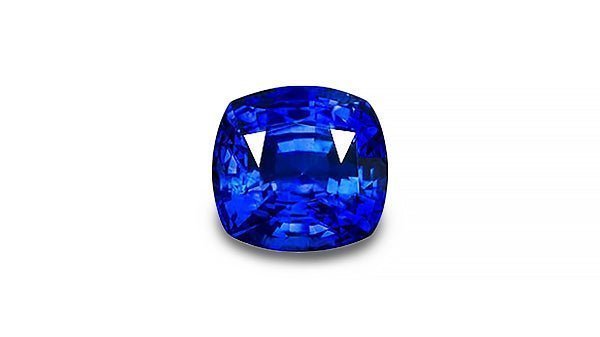
Article: Which Gemstones Attract Lasting Collector Interest, and Why?
Which Gemstones Attract Lasting Collector Interest, and Why?
The name of a gemstone is only the beginning
People often ask which gemstones appreciate in value. That invites a simple list, but the responsible question is different: why do knowledgeable collectors distinguish certain stones from many others carrying the same mineral name?
Within every category, stones differ in color, clarity, cut, treatments, documentation, origin, and character. This guide does not rank nine supposed winners. It groups them by three reasons for collector attention: historical recognition, a distinctive identity or optical effect, and a geographically limited source. None of the three guarantees a future price, rarity in an individual stone, or a successful resale.
The useful skill is moving from a familiar name to a defensible assessment of one gemstone. Our guides to what makes a gem rare and to investment quality explain the wider framework.
Historically recognized gemstones
Ruby, sapphire, and emerald have long histories in jewelry and collecting. That history gives specialists a shared language, but it does not make every example exceptional.
Ruby: origin matters, but it does not replace quality
Mogok in Myanmar has a centuries-old association with ruby. Montepuez in Mozambique became an important modern source after its discovery in 2009. Neither name is a quality grade.
Rubies from the same country can differ in color, transparency, inclusions, cut, and treatment. A laboratory may sometimes offer an origin opinion, but it does not decide whether the color is beautiful and it does not determine a future selling price. With a ruby, begin with the stone, then ask how the report supports identity, treatments and, where possible, origin.
Sapphire: small color distinctions can have technical boundaries
Kashmir, Myanmar, and Sri Lanka are historically significant sapphire sources. Origin remains part of the description, not an automatic statement of quality.
Padparadscha shows why trade names require precision. It refers to a narrowly described pinkish orange to orangey pink sapphire, generally in pastel tones with low to medium saturation. Laboratories also consider color stability. A poetic-sounding color can therefore have technical boundaries, yet the name still does not guarantee commercial importance. A sapphire report records gemological findings, not beauty or a future buyer’s response.
Emerald: clarity must be judged in the context of the species
Muzo and Chivor are historically important Colombian emerald regions. Yet emerald should not be judged like colorless diamond. Eye-visible inclusions are common and accepted, while an eye-clean stone is rare. The relevant question is how inclusions affect the appearance and integrity of an emerald, not whether they exist at all.
Natural inclusions must also be distinguished from fissure filling. Many faceted natural emeralds have fissures filled with oil, resin, wax, or another substance to improve apparent clarity. Fillers may change under heat or chemicals, so their type and extent matter for evaluation and for care. Our guide to hardness, toughness, and stability explains why durability is not one number.
Distinctive identity and optical behavior
Some gemstones hold attention because identification changed their history, or because their appearance has to be assessed in a particular way.
Spinel: a famous ruby that is not a ruby
The Black Prince’s Ruby in Britain’s Imperial State Crown is a red spinel. The historical name remains in use, but the gemological identity is different.
The example shows why identification comes before quality. Modern gemology separates ruby and spinel as different minerals. It does not imply routine laboratory error, and it does not make every spinel important. Likewise, the notable Mahenge discovery of 2007 is historical context, not evidence of a price trend. Each spinel still requires assessment of color, clarity, cut, and documentation.
Alexandrite: one photograph cannot show the whole effect
Alexandrite is a color-change variety of chrysoberyl. Its observed color depends on the light spectrum, so assessment compares the same stone in daylight or equivalent light and in warm incandescent or equivalent light.
A photograph taken under one lamp may be entirely honest, and it still cannot demonstrate the complete color change. The second lighting condition is not a flourish; it is part of understanding the stone. Fine larger alexandrites are rare, yet size alone does not establish quality. Color change, the colors seen in each light, clarity, and cut belong together. A report can identify alexandrite; it cannot decide whether a particular alexandrite belongs in a collection.
Paraiba: a trade term, not a country of origin
Paraiba is a trade term for copper- and manganese-bearing tourmaline that meets the relevant gemological criteria. It is not a separate species and it is not restricted to Brazil; qualifying material may come from Mozambique.
Brazilian material reached the international market at the end of the 1980s. That history explains the name, but the name does not prove Brazilian origin. Our Paraiba guide explains the terminology.
Gemstones linked to limited geological settings
A narrow geographic source can make supply difficult to expand, but it does not make supply perfectly fixed and it does not predict price. Existing stones continue to circulate, while mining and production can change.
Tanzanite: one current source is a fact, not a countdown
Tanzanite has one current source, the Merelani Hills in northern Tanzania. That unusual fact is not a basis for claiming exhaustion within a stated number of years. The source can be verified; the remaining life of the deposit cannot become a confident countdown without reliable reserve data. For a tanzanite, color, clarity, cut, treatments, documentation, and condition matter more than a dramatic supply story.
Tsavorite: a trade boundary within green grossular
Tsavorite is green grossular garnet. Lighter grossular may be sold under mint-related descriptions, including Merelani mint. These names do not create separate species or laboratory grades, and both colors can occur in the same pocket. A trade name helps discuss color, but it is not a universal laboratory boundary. The tsavorite guide provides the mineralogical context.
Demantoid: an inclusion is not a passport
Demantoid is green andradite garnet, not grossular. Horsetail inclusions are associated with some Russian material, but they are not proof of origin. Some Russian stones lack them, and similar inclusions occur elsewhere. A memorable internal feature can support an assessment alongside other evidence; it should not become a stand-alone origin conclusion.
What investment quality means at SOSNA Gems
Investment quality is a SOSNA Gems selection framework. It is not a laboratory grade, a recommendation, or a price forecast. It considers the specific stone: color, species-appropriate clarity, cut, treatments, documentation, the rarity of that particular combination of features, and practical suitability for long ownership.
A laboratory report has a narrower and irreplaceable role. Depending on the service and the material, it may state identity, whether the material is natural or synthetic, detectable treatments, and sometimes an origin opinion. It does not confirm beauty, rarity, investment quality, price, or the terms of a future sale. The report records findings; the market determines price.
Questions to ask about any of the nine gemstones
Before being persuaded by the name of a species, ask:
- Has the identity been established by an appropriate laboratory?
- Is the material natural or synthetic, and which treatments were detected or not detected?
- Does the color remain attractive under the lighting in which the stone will actually be viewed?
- How do inclusions and cut affect appearance, durability, and the distribution of weight?
- Is a claimed origin supported by a laboratory opinion, and is that opinion material to this particular stone?
- Does the trade name have a clear gemological meaning, or is it primarily commercial vocabulary?
- What care does the stone require, including sensitivity to heat, chemicals, impact, or changing fillers?
- What evidence supports the asking price beyond the name of the species?
These questions also separate collectible value from investment quality. Personal attachment can justify ownership, but emotional value is not a financial promise.
Sale and ownership risks remain
Exceptional gemstones have limited liquidity. Finding a buyer can take time, and a dealer or auction intermediary may charge a margin or commission. A resale price may be below the original retail price. Neither the timing nor the price of a sale can be guaranteed, and value can fall.
Disclosure, documentation, and careful storage reduce uncertainty about what you own. They do not remove market risk. A stone also requires care appropriate to its species, and a change in its condition or in a fissure filler can affect how it is assessed.
Frequently asked questions
Which gemstone is most likely to rise in price?
No species can be identified responsibly as a guaranteed future winner. Price depends on the specific stone, its quality, treatments, documentation, market conditions, and the circumstances of a later sale.
Does a famous origin make a gemstone investment quality?
No. Origin can add relevant context, but it is not a quality grade. Stones from the same deposit vary, and an origin opinion does not replace evaluation of color, clarity, cut, treatments, and condition.
Can a laboratory report confirm investment quality?
No. Investment quality is a SOSNA Gems selection framework, not a laboratory grade. A report may establish identity, whether the material is natural or synthetic, detectable treatments, and sometimes an opinion on origin. It does not confirm price, beauty, rarity, or future saleability.
Is an eye-clean gemstone always better?
No. Clarity must be assessed in the context of the species. In emeralds, inclusions visible to the unaided eye are common and accepted, while eye-clean stones are rare. The location and effect of inclusions matter more than a universal label.
Does a horsetail inclusion prove that a demantoid is Russian?
No. Horsetail inclusions are associated with some Russian demantoids, but they also occur in material from other locations and are absent from some Russian stones.
Why should alexandrite be viewed under two light sources?
Its color appearance depends on the spectrum of the light. Comparing daylight or a daylight-equivalent source with warm incandescent or equivalent light reveals more of the color change than a single photograph or one viewing condition.
Choose the evidence before the label
The nine species in this guide deserve attention for different reasons, and none of them deserves automatic confidence. Begin with identity, observable quality, treatment disclosure, documentation, and the practical realities of ownership. Then decide whether the individual stone, rather than its name, merits further consideration.
Explore the SOSNA Gems investment gemstone collection.
Disclaimer
This article is educational and does not constitute investment advice. It recommends no species and no individual stone. Colored gemstones have limited liquidity, their value can fall, and a future sale, its date, and its price cannot be guaranteed. Consider independent gemological, legal, tax, and financial advice before a high-value purchase.