Beryl: The Royal Gemstone of Many Colors
Introduction
In 1798, the French chemist Louis-Nicolas Vauquelin analyzed a beryl crystal and found inside it something no scientist had ever identified: a new chemical element, eventually named beryllium. The mineral gave its name to the element, and with it a claim few gemstones can make. Beryl is built around one of the scarcer elements in the earth's crust, which is why every member of its family, from emerald to aquamarine to morganite, exists only where geology performed a small miracle of concentration.
This guide covers the beryl family as a whole: what unites its varieties, what separates them, how treatment culture differs across the family, and why one mineral has supplied royalty with more famous gems than almost any other.
What Is Beryl?
Beryl is a beryllium aluminum silicate that crystallizes in the hexagonal system, typically as six-sided prisms. It rates 7.5 to 8 on the Mohs scale, carries a refractive index of roughly 1.57 to 1.60, and in its pure state is completely colorless. Every famous color in the family comes from trace elements borrowed during growth.
The reason beryl is precious begins with chemistry. Beryllium occurs in the crust at only a few parts per million, far too dilute to form minerals under ordinary conditions. Only in granitic pegmatites and certain hydrothermal veins, where the last fluids of cooling magma concentrate rare elements, does beryllium reach the density needed to build crystals. Wherever you see a beryl, you are looking at the end product of an unusually patient geological process.
The Beryl Family
Emerald
Green beryl colored by chromium or vanadium, and the family's aristocrat. Emerald forms in geologically violent settings that fill it with inclusions, which is why clean stones command extraordinary prices and why its treatment culture revolves around oiling. Cleopatra's Egyptian mines made it the first beryl of legend; our profile of emerald tells the full story.
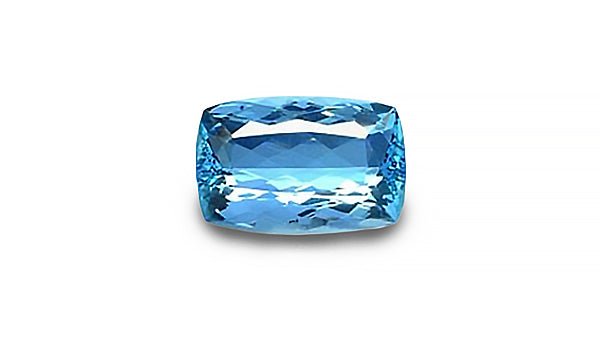
Aquamarine
Blue to blue-green beryl colored by iron, grown in calm pegmatite pockets that allow large, clean crystals. Most material is gently heated to remove green undertones. The complete picture, from the Santa Maria grade to the Dom Pedro, is in our aquamarine guide.
Morganite
Pink to peach beryl colored by manganese, named in 1910 after the banker J.P. Morgan and now a fixture of bridal jewelry. Its color builds with size, and untreated peach stones carry quiet collector prestige. See our full morganite guide.
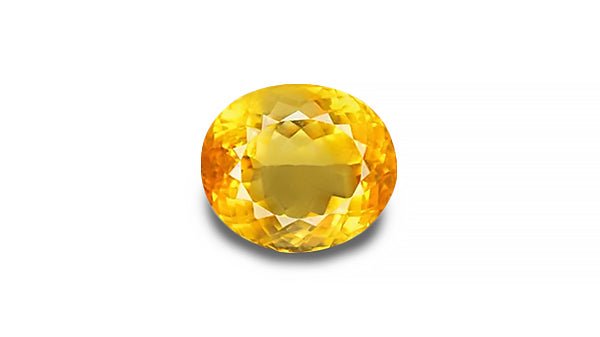
Heliodor
Yellow to golden beryl colored by iron, its name taken from the Greek for "gift of the sun." Fine heliodor combines strong color with beryl's typical clarity and remains one of the family's most underrated members.
Goshenite
Colorless beryl, named after Goshen, Massachusetts. Its place in history is larger than its place in jewelry: medieval readers used polished clear beryl as magnifying "reading stones," and the German word for eyeglasses, Brille, descends directly from beryllus. A mineral family literally lent its name to European eyesight.
Red Beryl
The family's great rarity, colored raspberry red by manganese and found in gem quality only in the Wah Wah Mountains of Utah. Estimates in the trade hold that for every red beryl mined, well over a hundred thousand diamonds come out of the ground. Most crystals are under a carat; clean faceted stones above two carats are museum events.
The family at a glance:
| Variety | Color | Colored by | Key sources | Market position |
|---|---|---|---|---|
| Emerald | Green | Chromium, vanadium | Colombia, Zambia, Brazil | Premier colored gem |
| Aquamarine | Blue to blue-green | Iron (Fe²⁺) | Brazil, Pakistan, Africa | Widely loved, accessible |
| Morganite | Pink to peach | Manganese (Mn²⁺) | Madagascar, Brazil | Bridal favorite |
| Heliodor | Yellow to golden | Iron (Fe³⁺) | Brazil, Ukraine, Namibia | Underrated collector stone |
| Goshenite | Colorless | None | Worldwide | Historical, affordable |
| Red beryl | Raspberry red | Manganese (Mn³⁺) | Utah, USA only | Extreme rarity |
One Family, Three Treatment Cultures
Beryl offers a lesson in why treatment disclosure must be learned per stone, never per family. Emerald is routinely oiled to reduce the visibility of fissures, a treatment that requires care and periodic renewal. Aquamarine and morganite are routinely heated, a stable, permanent, undetectable improvement. Heliodor, goshenite, and red beryl generally reach the market untreated. Three siblings, three completely different answers to the same question, which is why an honest seller specifies treatment for every individual stone. The principles are laid out in our guide to treated versus untreated gemstones.
Clarity: Different Standards for Different Siblings
Expectations of clarity also split the family. Emerald grows amid tectonic stress, so its internal gardens of inclusions, the French trade calls them jardin, are accepted as part of its character. Aquamarine, morganite, and heliodor grow in open pockets and are expected to be eye-clean, with visible inclusions penalized. Judging a beryl means first knowing which standard applies; our guide to clarity grades explains the framework.
Where Beryl Is Mined
Colombia and Zambia lead the emerald trade, with Brazil contributing across nearly the entire family, from aquamarine and heliodor to morganite. Madagascar produces fine morganite and aquamarine, Pakistan and Afghanistan yield exceptionally clear sky-blue aquamarine from high-altitude pegmatites, Ukraine's Volodarsk deposit is celebrated for heliodor, Russia's Urals carry historical weight, and Utah stands alone as the world's source of gem red beryl.
Care Across the Family
All beryls share the same basics: lukewarm water, mild soap, a soft cloth, and storage away from harder stones such as sapphire and diamond. The critical rule concerns ultrasonic cleaners: safe enough for clean aquamarine or morganite, genuinely dangerous for emerald, whose oiled fissures can be emptied or extended by ultrasonic vibration. When in doubt, wash by hand. Prolonged direct sunlight is best avoided for the colored varieties, as some hues can soften over years of exposure.
Famous Beryls
The family's trophy cabinet is remarkable. The Mogul Emerald, 217.8 carats and carved with prayers and poppies in 17th-century India, sold at auction for millions. The Dom Pedro aquamarine, a 10,363-carat obelisk, anchors the Smithsonian's gem hall. Queen Elizabeth II's Brazilian aquamarine parure grew from a coronation gift into one of the modern monarchy's most recognizable jewel sets. Red beryl, meanwhile, is famous precisely for how rarely anyone gets to see one.
Why Choose Beryl?
Beryl offers something for every kind of buyer within a single mineral family: the prestige of emerald, the everyday elegance of aquamarine, the romance of morganite, the value of heliodor, and the trophy scarcity of red beryl, all sharing durability suited to real wear. Understanding the family means understanding most of what matters in colored stones: how trace chemistry creates color, how geology dictates clarity, and how treatment culture differs stone by stone.
Explore our collection of natural beryl gemstones, each described with full origin and treatment disclosure.