Aquamarine: The Gem of Ocean Depths and Serenity
Introduction
In the late 1980s, prospectors in Pedra Azul, Brazil, unearthed an aquamarine crystal nearly a meter long, then dropped it. The crystal broke into three pieces, and the largest of them became the Dom Pedro: a 10,363-carat obelisk cut by Bernd Munsteiner, today the largest cut aquamarine in the world and a centerpiece of the Smithsonian collection. A stone that survives its own discovery in fragments and still yields a two-kilogram gem tells you something essential about aquamarine: beryl grows big, grows clean, and rewards patience.
This guide covers what aquamarine actually is, why it is blue, how heating shapes almost everything on the market, where the finest crystals form, and how to judge quality in a gem where clarity is expected rather than forgiven.
What Is Aquamarine?
Aquamarine is the blue-to-blue-green variety of beryl, a beryllium aluminum silicate that crystallizes in the hexagonal system. Its name comes from the Latin aqua marina, "sea water," and few gems are named more accurately. The stone's refractive index of roughly 1.57 to 1.59 gives it a quieter brilliance than sapphire, closer to the glassy calm of still water than to fire.
Its closest sibling is emerald. The two share an identical crystal structure and differ only in the trace element that enters the lattice: chromium and vanadium produce emerald's green, while iron produces aquamarine's blue. The difference in trace chemistry also explains their opposite reputations for clarity. Emerald typically forms in tectonically stressed environments that fill the crystal with inclusions, while aquamarine grows slowly in open pegmatite pockets, which is why large, eye-clean aquamarine is normal and large, eye-clean emerald is a sensation. Our overview of the beryl family maps all of its color siblings.
Why Aquamarine Is Blue
Beryl is colorless in its pure state. Aquamarine's color comes from iron, and the precise shade depends on which form the iron takes inside the crystal. Iron in the Fe²⁺ state produces blue. Iron in the Fe³⁺ state adds a yellow component, and the two together create the greenish-blue tone common in untreated material fresh from the ground.
This chemistry explains the single most important commercial fact about aquamarine: gentle heating, typically around 400 °C, converts the yellow-producing iron and leaves pure blue behind. The change is stable, permanent, and essentially undetectable.
Treatment: What Buyers Should Assume
The majority of aquamarine on the market has been heated to remove green undertones. The treatment is accepted throughout the trade, does not harm the stone, and does not carry the value penalty that heavy treatments impose on other gems. Even so, honest disclosure matters: a seller should state that heating is standard, and untreated stones with naturally fine blue color deserve to be identified as such, because they are scarcer. The logic of why treatment status shapes value across the gem world is covered in our guide to treated versus untreated gemstones.
One historical case deserves a warning. Deep blue beryl from the Maxixe mine in Brazil, first found in 1917, owes its dramatic color to natural or artificial irradiation, and that color fades with exposure to light. Genuine aquamarine blue is stable; Maxixe-type blue is temporary. A stone offered in an unusually deep blue at an unusually low price warrants laboratory verification.
Where Aquamarine Is Mined
Aquamarine forms in granitic pegmatites, the last, chemically concentrated stage of cooling granite where rare elements like beryllium finally reach high enough concentrations to build beryl crystals. Pegmatites occur worldwide, but a few regions dominate gem production.
Brazil
Brazil, above all the state of Minas Gerais, has defined the aquamarine market for over a century. The finest deep blue material carries the trade name Santa Maria, after the Santa Maria de Itabira mine, and that name now describes a color grade as much as an origin. Brazilian pegmatites have also produced the record crystals, from the Dom Pedro rough to historic finds weighing over a hundred kilograms.
Pakistan and Afghanistan
The high-altitude pegmatites of northern Pakistan, mined at elevations where work is possible only part of the year, yield exceptionally transparent crystals in a soft, icy blue. Afghan material from neighboring geology shares this character.
Africa
Madagascar produces blue-green stones of strong brilliance, while Mozambique and Nigeria have become significant modern sources of fine blue material. African production keeps the mid-market supplied and occasionally delivers stones that rival the best Brazilian color.
Russia
The Ural Mountains supplied icy blue aquamarine to the Russian court in the 19th century, and while output today is minor, Uralian stones retain historical cachet among collectors.
Color: What Determines Value
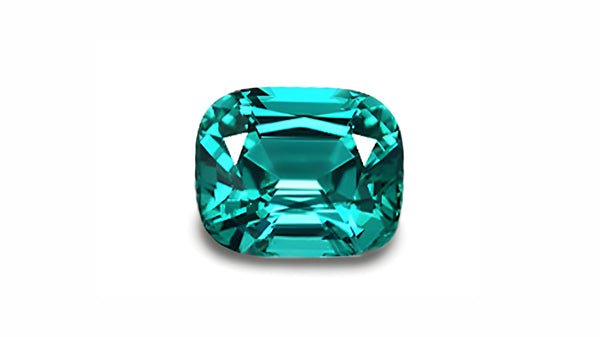
Color drives aquamarine pricing more than any other factor, and the hierarchy is simple. Pure blue without green outranks greenish blue, and deeper saturation outranks paler tones. The Santa Maria grade sits at the top: a saturated, slightly velvety blue with no visible green. Below it, medium blues remain highly desirable, while very pale stones are attractive and affordable rather than rare.
Personal taste has more room here than the price ladder suggests. The pale, watery blues that command lower prices are precisely what some designers and collectors want from the stone, and the sea-glass blue-green tones rejected by the classical grading have their own devoted market.
Clarity, Cut and Size
Aquamarine holds a higher clarity standard than almost any colored stone. Because clean crystal is geologically normal for this gem, visible inclusions are penalized rather than tolerated; the market expectation is eye-clean at minimum, and top stones are clean even under magnification. How gemologists assess this is explained in our guide to clarity grades.
The scale beryl can reach still surprises people who know the stone only from jewelry. In 1910, miners at Marambaia in Minas Gerais recovered a single transparent aquamarine crystal weighing about 110 kilograms, so clean that observers reported reading text through its full length. It was cut into thousands of gems, and finds like it are the reason large aquamarines, unlike large rubies or emeralds, do not command exponential per-carat premiums.
Cutting favors shapes that hold color in a stone whose tone is often light: emerald cuts, ovals, and cushions dominate. Because rough is available in size, cutters can afford proper proportions, and a well-cut aquamarine should show no window in the center.
Durability and Everyday Wear
At 7.5 to 8 on the Mohs scale, aquamarine is one of the more practical colored stones for daily wear, hard enough for rings worn without special caution. Two habits protect it: skip ultrasonic cleaners, which can extend microscopic liquid inclusions into fractures, and clean instead with warm water, mild soap, and a soft brush. Store it apart from diamonds and corundum, which are harder still. For context on what hardness numbers mean in practice, see our gemstone hardness guide.
Famous Aquamarines
Aquamarine's royal record is long. The Brazilian government presented Queen Elizabeth II with a necklace and earrings of deep blue Brazilian stones as a coronation gift in 1953, a set she later expanded into a full parure with a matching tiara. Emperor Maximilian I of Mexico owned a celebrated blue beryl, and Jacqueline Kennedy received a notable aquamarine from Brazil during the Kennedy presidency.
None of them approach the Dom Pedro. The 10,363-carat obelisk, cut over months by Bernd Munsteiner in 1992 with a design of reflective "negative facets" he called Ondas Marítimas, sea waves, has been displayed at the Smithsonian Institution since 2012.

Dom Pedro Aquamarine, the largest cut aquamarine in the world, housed at the Smithsonian Institution.
Symbolism and Tradition
Roman sailors carried aquamarine as protection at sea, believing it sacred to Neptune, and medieval tradition named it a stone of courage and clear thinking. It served historically as a betrothal gift associated with fidelity in marriage. These meanings belong to cultural history rather than to any physical property of the stone, but they have followed aquamarine for two thousand years and still shape how it is given. It is also the birthstone for March; our birthstone guide covers the full calendar.
Why Choose Aquamarine?
Aquamarine offers a combination few colored stones match: genuine beryl pedigree shared with emerald, hardness sufficient for daily wear, clarity as a standard rather than a luxury, and a color that flatters nearly every setting and skin tone. Its accessibility in larger sizes makes it one of the most rewarding stones for design-led jewelry, where a clean ten-carat gem remains attainable.
Choose it for the color first. A fine aquamarine holds the exact shade of sea it was named for, and it will hold that shade for generations.
Frequently Asked Questions
Is aquamarine heat treated?
Most aquamarine on the market has been gently heated to around 400 degrees Celsius to remove green undertones and produce a purer blue. The treatment is stable, permanent, accepted throughout the trade, and does not harm the stone. Untreated stones with naturally fine blue color are scarcer and should be identified as such.
What is Santa Maria aquamarine?
Santa Maria is a trade name for the finest aquamarine color: a saturated, slightly velvety deep blue with no visible green. The name comes from the Santa Maria de Itabira mine in Brazil and today describes a color grade rather than a guaranteed origin.
Is aquamarine hard enough for daily wear?
Yes. At 7.5 to 8 on the Mohs scale, aquamarine is one of the more durable colored gemstones and suits rings worn every day. Avoid ultrasonic cleaners, which can extend microscopic inclusions into fractures, and clean with warm water, mild soap, and a soft brush.
What is the difference between aquamarine and emerald?
Both are varieties of the mineral beryl with identical crystal structure. Chromium and vanadium color emerald green, while iron colors aquamarine blue. Aquamarine also grows in calmer geological environments, which is why it is typically far cleaner than emerald.
Where does the best aquamarine come from?
Brazil, especially the state of Minas Gerais, has defined the market for over a century and produced the finest deep blue material. Northern Pakistan yields exceptionally transparent icy-blue crystals, and Madagascar, Mozambique, and Nigeria are important modern sources.
Does aquamarine fade in sunlight?
Genuine aquamarine blue is stable. The exception is Maxixe-type beryl, whose deep blue comes from irradiation and fades with exposure to light. An unusually deep blue stone at an unusually low price warrants laboratory verification.
What is the largest aquamarine in the world?
The Dom Pedro, a 10,363-carat obelisk cut by Bernd Munsteiner in 1992 from a crystal found in Pedra Azul, Brazil. It has been displayed at the Smithsonian Institution since 2012.
Explore our selection of natural aquamarine gemstones to compare color grades and clarity in certified stones.