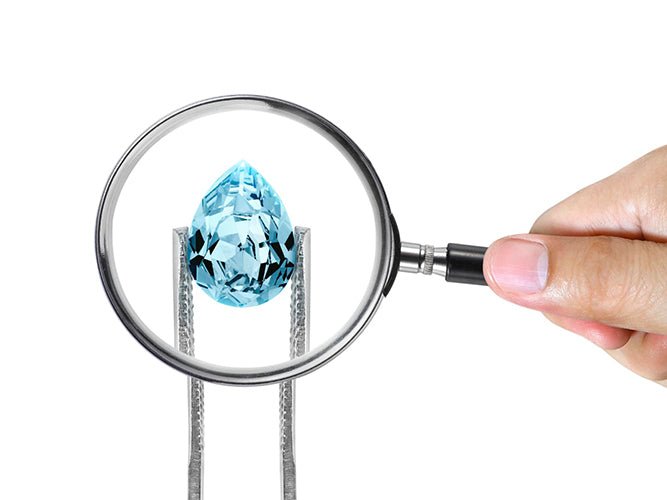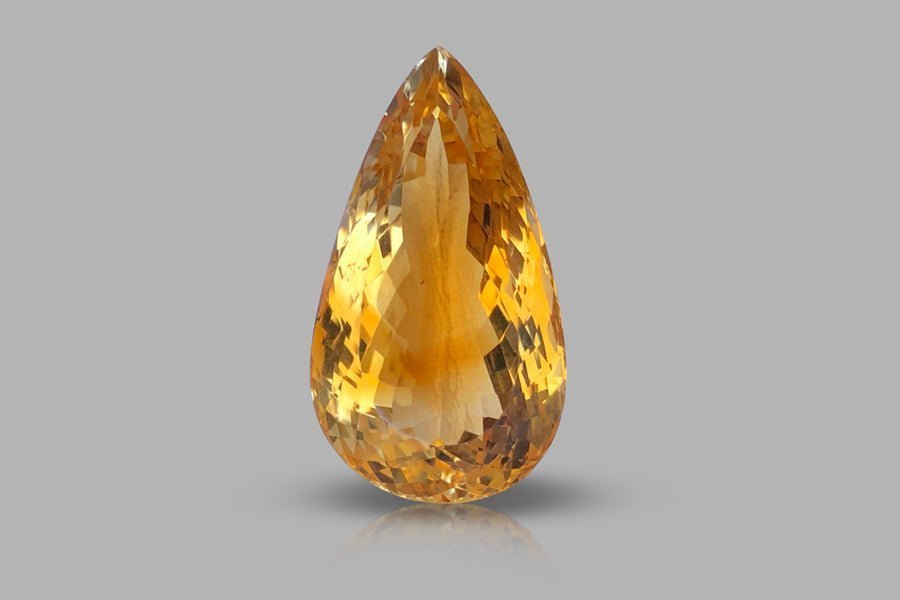


The Art of the Gemstone Cut – Where Light Learns to Dance
Introduction: A Gem Is Found in the Earth, but Beauty Is Engineered
A gemstone is born deep within the Earth, shaped over millions of years by pressure, temperature, and chemistry. Yet in its natural state, it is often dull, opaque, or uneven. What we recognize as beauty comes from more than the crystal alone. It emerges later.
Cut is the moment where geology meets intention. It is the process that determines how a gemstone interacts with light, whether it reflects it, absorbs it, or allows it to escape unnoticed. Two stones of identical origin, color, and clarity can look entirely different once cut. One appears vivid and alive. The other remains flat, heavy, or lifeless.
The difference is structural, and it is anything but subtle.
A gemstone is formed by geology, but revealed by geometry.
In colored gemstones, cut reaches far beyond maximizing sparkle. It is about managing light in a way that supports color, preserves transparency, and respects the internal structure of the crystal. Every decision, from the depth of the pavilion to the angle of each facet, influences how the gem will be perceived.
Without this intervention, even rare material can fail to impress. With it, a modest crystal can become unexpectedly compelling.
Cut is where potential becomes visible. It is where a gemstone stops being a mineral and starts becoming an object of value.
The Short Answer: What Gemstone Cut Actually Does
Gemstone cut determines how a stone interacts with light, and that interaction defines everything the eye perceives.
At its core, cut controls four critical outcomes:
- how light enters and returns from the stone
- how color is distributed and perceived across the surface
- how large or small the gemstone appears face-up
- how balanced, symmetrical, and visually "complete" the gem feels
When cut well, a gemstone returns light back to the viewer. It appears bright, lively, and consistent. Color looks even. The stone feels intentional.
When cut poorly, light escapes through the bottom or sides. The result is a gem that looks dull, uneven, or darker than it should. In extreme cases, the center becomes transparent, a phenomenon known as windowing, or overly dark, creating areas of extinction.
In diamonds, this relationship is largely standardized. In colored gemstones, it is far more complex.
Here, cut governs color as much as brilliance, balancing depth and brightness so that the stone appears rich yet bright, vibrant yet saturated.
A well-cut gemstone shapes light rather than merely reflecting it.
What "Cut" Really Means in Gemology
In everyday language, "cut" is often confused with shape. In gemology, the two describe different things.
Shape refers to the outline of the gemstone: round, oval, cushion, pear. Cut, by contrast, describes how the stone is proportioned, faceted, and finished to control light.
This distinction matters. Two emeralds can share the same shape, yet behave completely differently depending on how they are cut.
Gemstone cut is defined by several key components working together:
- Proportions – the relationship between depth, width, and angles of the stone
- Facet arrangement – how the individual surfaces are placed and aligned
- Symmetry – whether the structure is balanced and consistent
- Polish – the quality of the surface finish affecting light reflection
Within this structure, specific elements play a critical role. The pavilion (the lower part of the stone) determines whether light is reflected back or lost. The crown (upper portion) influences how light enters and disperses. The table (top facet) affects brightness and the face-up appearance. Between crown and pavilion sits the girdle, the stone's outer rim, whose thickness affects both durability and how securely a gem can be set.
The angles at which these surfaces meet decide everything. Every gem species has a critical angle, determined by its refractive index, below which light escapes through the pavilion instead of reflecting back to the eye. Because refractive index differs from species to species, the ideal pavilion angle for a sapphire is wrong for a tourmaline, and wrong again for a garnet. This single fact explains why colored stone cutting can never be reduced to one formula.
If these elements are misaligned, the gemstone cannot perform, regardless of its color or clarity.
This is why cut is a geometric system designed to manage light with precision, never a cosmetic decision.
Cut is where beauty stops being accidental.
In high-quality gemstones, this system feels effortless. The viewer does not analyze proportions or facet angles; they simply see a stone that appears balanced, alive, and complete.
That effect is engineered.
How Light Behaves Inside a Gemstone
A gemstone generates no beauty on its own. It interacts with light, and what we perceive as brilliance, depth, or life is simply the result of how that light behaves inside the crystal.
When light enters a gemstone, it slows down and bends, a process known as refraction. Ideally, that light is then reflected internally across the facets and returned back to the viewer. This return of light creates brightness and visual energy.
If the angles are correct, the stone appears alive. If they are wrong, light escapes, and the gemstone loses presence.
This interaction creates several key visual effects:
- Brilliance – the overall brightness created by light returning to the eye
- Scintillation – the flashes of light as the stone moves
- Extinction – areas that appear overly dark due to poor light return
- Windowing – a transparent "see-through" effect where light passes straight through the stone instead of reflecting
These effects are directly visible, well beyond abstract theory.
A well-cut gemstone shows consistent brightness across its surface, with controlled contrast that gives it depth. A poorly cut stone may have a pale center, dark patches, or uneven light distribution that breaks the visual harmony.
The most common issue is windowing. When the pavilion is too shallow, light escapes through the bottom instead of reflecting back. The center of the gem appears transparent, as if you are looking through glass rather than into a gemstone. A simple test works even in a shop: hold the stone face-up over printed text. If you can read the letters through it, you are looking at a window.
On the opposite extreme is extinction. When a stone is cut too deep or with incorrect angles, light becomes trapped or absorbed, creating dark zones that reduce brightness and make the gem appear heavy. Some extinction is normal and even desirable, because contrast gives a stone depth; the problem begins when dark zones dominate the face.
Between these extremes lies the goal: controlled light return, where the gemstone appears bright, balanced, and visually complete from multiple angles.
Cutting, at its highest level, is the discipline of managing this balance.
Because in the end, a gemstone is judged by what it returns, rather than by what it contains.
Why Colored Gemstones Are Cut Differently Than Diamonds
In diamonds, cut is governed by precision. Standardized proportions and angles are designed to maximize brilliance based on a known refractive index and consistent optical behavior. This allows for grading systems, Excellent, Very Good, and so on, built on measurable parameters.
Colored gemstones follow a different model entirely.
Each gem species has a different refractive index, different internal structure, and different response to light. More importantly, color rather than brilliance is the primary driver of value. This changes the objective of cutting entirely.
Instead of maximizing light return at all costs, cutters must balance multiple competing factors:
- enhancing or preserving color
- managing inclusions and internal features
- respecting the natural shape of the rough crystal
- avoiding structural weaknesses in brittle materials
- retaining as much usable weight as possible
In many cases, these priorities conflict. A cut that improves brilliance may weaken color. A cut that preserves weight may introduce windowing. A cut that removes inclusions may reduce size significantly.
No universal solution exists.
There is no perfect cut in colored gemstones, only the most intelligent compromise for that crystal.
This is where craftsmanship becomes critical. Experienced cutters apply judgment rather than fixed formulas. They read the stone, its color zoning, its inclusions, its crystal orientation, and adjust their approach accordingly.
One of the most important considerations is pleochroism, the ability of some gemstones, such as tanzanite or tourmaline, to show different colors depending on the viewing angle. Proper orientation during cutting determines which color dominates in the finished gem. In tanzanite the choice is stark: cutting for the purest blue typically sacrifices more rough than cutting for violet, so every stone on the market embodies a decision made between color and yield.
Structure imposes its own limits. Stones with cleavage, such as topaz, tanzanite, or sphalerite, can split along built-in planes, so the cutter must orient facets away from those directions and work with gentler speeds and pressures. In brittle materials, an ambitious design can end a crystal in an instant.
In other cases, the goal is to deepen color without making the stone too dark, or to maintain brightness while preserving saturation. These decisions remain invisible in the final shape alone, yet they define how the gemstone performs.
Unlike diamonds, where consistency is the goal, colored gemstone cutting is an exercise in adaptation.
It is about understanding when to break the rules rather than simply applying them.
The Main Gemstone Cut Styles
While each gemstone is cut individually, most fall into a set of established cutting styles. These styles determine how light behaves, how color is displayed, and how the stone performs overall, well beyond aesthetics.
Understanding them allows you to recognize how a gemstone was designed to interact with light, rather than only what it looks like.
Brilliant Cut
The brilliant cut is designed to maximize light return. It uses numerous triangular and kite-shaped facets arranged to reflect light back toward the viewer, creating strong sparkle and visual energy.
This style is commonly used in round, oval, cushion, and pear-shaped gemstones. It works best for stones with good transparency and strong color, where added brilliance enhances overall appearance.
However, in very dark stones, excessive brilliance can create contrast that makes the gem appear uneven rather than balanced.
Step Cut (Emerald, Asscher)
Step cuts use long, parallel facets arranged in a layered structure, often compared to mirrored steps. Instead of sparkle, they emphasize clarity, transparency, and depth.
This cut is ideal for gemstones with clean internal structure, such as high-quality emeralds or aquamarines. It creates a calm, elegant visual effect: less dynamic than brilliant cuts, and more refined. The emerald cut carries a second, structural purpose: its truncated corners protect the vulnerable edges of a crystal prone to chipping, which is precisely why the style bears the stone's name.
The trade-off is exposure. Step cuts reveal inclusions and imperfections rather than hiding them.
Mixed Cut
The mixed cut combines elements of both systems: typically a step-cut pavilion (bottom) with a brilliant-cut crown (top). This allows the cutter to balance structure and brilliance within a single stone.
It is widely used in sapphires and rubies, where maintaining color while adding light return is critical. When executed well, it produces a gemstone that feels both vibrant and stable.
Cabochon Cut
Cabochons are smooth, domed stones without facets. Instead of reflecting light sharply, they diffuse it across the surface, creating a soft glow.
This cut is used for opaque or heavily included materials, such as opal, moonstone, or certain types of spinel. It can also reveal optical phenomena like chatoyancy (cat's eye) or asterism (star effect), where fine parallel inclusions inside the stone reflect light into a moving band or a six-rayed star. In these cases, faceting would destroy the effect rather than enhance it.
Fancy Cuts
Fancy cuts include shapes such as marquise, trillion, heart, or kite. These are often chosen for design reasons or to highlight a specific feature of the rough material.
When executed with precision, they can create striking and unique gemstones. However, they require excellent symmetry and proportion control. Without it, the result can feel unbalanced or visually awkward.
Each of these styles represents a different philosophy of cutting, in how the gemstone is intended to behave as much as in shape.
The best choice is never universal. It depends on the material, the color, and the vision behind the stone.
Cut and Color: Why Proportions Change What You See
In colored gemstones, cut does more than control light. It controls color itself.
This is one of the most important and most misunderstood aspects of gemstone cutting. The same crystal can appear dramatically different depending on how it is proportioned and oriented.
The key variable is depth.
A gemstone cut too deep allows light to travel longer paths within the material. This can intensify color, making it appear richer and more saturated. But if taken too far, the stone becomes overly dark, losing brightness and visual clarity.
A shallow cut has the opposite effect. Light escapes quickly, making the stone appear brighter, often at the cost of depth and saturation. In extreme cases, this leads to windowing, where the center becomes transparent and color appears diluted.
The goal is balance:
Rich enough to feel substantial. Bright enough to feel alive.
Depth interacts with the material itself. Pale rough is often cut deeper to build color through longer light paths, which is why fine morganite and pale sapphire frequently show generous pavilions. Very dark rough is cut shallower to let light through and lift the tone. The correct proportions therefore depend as much on the individual crystal's saturation as on the species.
Another factor is color distribution. Many gemstones exhibit color zoning, uneven areas of stronger or weaker color within the crystal. A skilled cutter can orient the stone to minimize these differences, creating a more even face-up appearance.
This becomes even more critical in pleochroic gemstones, where different crystal directions display different colors. By aligning the cut correctly, the cutter chooses which color becomes dominant in the finished gem.
These decisions appear as experience rather than as technical parameters: visible in how the stone looks when held in real light.
In practice, cutters often sacrifice weight to achieve better color performance. A heavier stone may look impressive on paper, while a slightly smaller stone with better proportions will appear more vibrant and valuable.
This is why carat weight alone can be misleading.
In colored gemstones, cut determines what you see as much as how much you see.
Common Cutting Problems: What Makes a Gem Look Lifeless
Even high-quality rough can result in a disappointing gemstone if the cut is poorly executed. In many cases, what buyers perceive as "weak color" or "low quality" is actually a problem of proportions and light management rather than the material itself.
These issues are anything but subtle. Once you understand them, they become immediately visible and impossible to ignore.
| Cutting Issue | What It Looks Like | Why It Matters |
|---|---|---|
| Windowing | Transparent or "see-through" center | Light escapes instead of returning, reducing color and presence |
| Extinction | Dark, lifeless areas (often in the center) | Light is absorbed or trapped, making the stone appear heavy |
| Overly Deep Cut | Small face-up size, overly dark appearance | Color becomes too dense, brightness is lost |
| Overly Shallow Cut | Bright but washed-out look | Loss of saturation and structural depth |
| Poor Symmetry | Uneven outline, misaligned facets | Disrupts light return and visual balance |
| Off-Center or Uneven Structure | Stone feels visually "tilted" or inconsistent | Reduces harmony and perceived quality |
| Thick or Uneven Girdle | Hidden weight in the rim, stone looks small for its carats | Carat weight is spent where it cannot be seen |
The most common of these is windowing. It often occurs when cutters prioritize weight retention over optical performance. By keeping the stone shallow, they preserve carat weight and sacrifice the very quality that makes the gemstone visually compelling.
Extinction is the opposite problem, and equally damaging. When proportions are too deep or angles are incorrect, light cannot return effectively. The result is a stone that appears dark and lifeless, even under strong lighting.
These are structural flaws in how the gemstone interacts with light, far beyond minor imperfections.
A well-cut gemstone avoids both extremes. It neither maximizes weight nor chases brightness at the expense of color. It maintains balance, where light, color, and structure work together.
Because in the end, a gemstone is judged by how it performs in the real world rather than by its specifications.
Most cutting mistakes are deliberate decisions made to preserve weight instead of beauty.
Why Cut Affects Value
In gemstones, value depends on how effectively rarity is expressed, and cut is the mechanism that makes that expression visible.
A fine crystal in its natural state has potential. A well-cut gemstone realizes it.
This is why cut is an economic factor as much as an aesthetic one.
First, cutting involves loss. A significant portion of the original rough is removed to achieve proper proportions, symmetry, and light performance. In some cases, more than half of the original material is sacrificed. The better the cut, the more precise, and often more aggressive, this process becomes.
Second, cutting requires expertise. High-quality cutting resists automation. It depends on the cutter's ability to interpret the crystal, its color zoning, inclusions, and internal structure, and make decisions that balance beauty with yield. This level of skill is limited, and therefore adds intrinsic value.
Third, well-cut gemstones are inherently rarer. Many stones on the market are cut to preserve weight rather than maximize performance. This creates a wide availability of average material, and a much smaller pool of stones that are truly well executed.
As a result, two gemstones with identical origin, size, and clarity can differ significantly in value based solely on cut.
Value lies in how well a stone has been realized, as much as in what it is.
For collectors and informed buyers, this becomes a defining factor. A well-cut gemstone is more beautiful, more consistent in its appeal, more stable in its desirability, and more resilient in long-term perception.
Cut, in this sense, is transformation rather than decoration, and that transformation carries measurable weight in the market.
What to Look For When Buying a Gemstone
You need no specialized tools or gemological training to recognize a well-cut gemstone. While laboratory analysis can confirm origin or treatment, cut quality is something you can often judge with your own eyes, once you know what to look for.
The goal is balance rather than perfection.
Here are the key indicators:
- Consistent light return – The stone should appear bright across most of its surface, rather than concentrated in one area while dull in another.
- No obvious windowing – The center should not look transparent or "see-through" when viewed face-up.
- Controlled depth – The stone should appear neither overly dark (too deep) nor washed out (too shallow).
- Even color distribution – Color should feel balanced, without strong patches or zoning that disrupts the appearance.
- Clean symmetry – The outline should feel intentional, with no visual imbalance or distortion.
- Smooth finish – Facets should be well-polished, without scratches, chips, or dull surfaces.
- Sensible dimensions – Compare millimeter measurements against carat weight. A stone that faces up small for its weight is carrying that weight in depth or in a thick girdle.
Beyond these technical points, there is a more intuitive test.
Does the stone hold your attention?
A well-cut gemstone has presence. It interacts with light in a way that feels natural and complete. It requires no explanation; it simply works.
This is the result of correct proportions and thoughtful execution, well beyond subjective preference.
Because when cut is right, the gemstone reveals itself immediately, with nothing left to argue.
If you want a broader perspective on how these factors influence long-term value, see our guide: What Makes a Gem Rare.
How Sosna Gems Evaluates Cut
At Sosna Gems, cut is evaluated as a functional system, a set of decisions that determine how effectively a gemstone performs in real light, rather than as a stylistic preference.
Our selection process begins with one principle: the cut must support the stone rather than compromise it.
We focus on several core criteria:
- Balanced proportions – The depth, angles, and overall structure must enhance light return without creating windowing or excessive extinction.
- Color performance – The cut must support saturation and even color distribution rather than diluting or darkening the stone unnecessarily.
- Controlled light behavior – The gemstone should show consistent brightness with natural contrast, free of chaotic reflections or dead zones.
- Intentional symmetry – The stone must feel visually stable and well-composed, without distortion or imbalance.
Just as important are the stones we decline.
Gemstones cut primarily to preserve weight at the expense of beauty are excluded.
This includes stones with obvious windowing, overly deep profiles that reduce brightness, or proportions that prioritize carat size over visual performance. These compromises are common in the market, and they are precisely what we avoid.
Each gemstone is evaluated individually. No template applies across all stones, because each crystal requires its own solution. What matters is whether the cut achieves balance, rather than whether it follows a standard.
Our goal is simple: to select gemstones where cut, color, and structure align, and where that alignment is visible without explanation.
Explore Further
Gemstone Knowledge
- Clarity Grades: What They Mean
- Understanding Gemstone Hardness
- Treated vs. Untreated Gemstones
- Gemstone Care
Explore Gemstones
Frequently Asked Questions About Gemstone Cut
What is the difference between cut and shape?
Shape refers to the outline of the gemstone (such as round or oval), while cut describes how the stone is proportioned and faceted to control light. Two stones can share the same shape but differ significantly in cut quality.
Why do some gemstones look dark in the center?
This is usually caused by extinction, where light fails to return to the eye due to incorrect angles or excessive depth. The result is a dark, lifeless area within the stone. Some contrast is normal and gives a gem depth; the problem begins when dark zones dominate the face.
What is windowing in a gemstone?
Windowing occurs when the center of the stone appears transparent. It is caused by a cut that is too shallow, allowing light to pass through instead of reflecting back. A simple test: hold the stone face-up over printed text. If you can read the letters through it, the stone has a window.
Are colored gemstones graded for cut like diamonds?
No. Unlike diamonds, colored gemstones have no standardized cut grades. Each stone is evaluated individually based on how well the cut supports color, light return, and overall appearance.
Which cut is best for colored gemstones?
No cut is universally best. The ideal cut depends on the gemstone's properties, including color, clarity, refractive index, and crystal structure. The goal is always to achieve balance between light and color.
Does a better cut increase gemstone value?
Yes. A well-cut gemstone is more visually appealing, rarer in the market, and more desirable over time. Cut directly influences how effectively a gemstone expresses its natural qualities.
Why are some cabochons more valuable than faceted stones?
Cabochons are used for materials where optical effects or internal structure matter more than brilliance. In such cases, a smooth dome enhances phenomena such as cat's eye or star effects that faceting would destroy.
Why does a heavier stone sometimes look smaller?
Because carat weight can be hidden where it cannot be seen: in an overly deep pavilion or a thick girdle. Always compare millimeter dimensions alongside carat weight, since two stones of equal weight can differ noticeably in face-up size.