Garnet: The Gemstone of Passion, Strength, and Royalty
Introduction
For most of the 20th century, gemology textbooks repeated one confident sentence: garnet occurs in every color except blue. Then, in the late 1990s, miners near Bekily in southern Madagascar began pulling out stones that glowed blue-green in daylight and shifted to purple under lamplight, and the sentence had to be rewritten. The discovery was a fitting correction for a gem that has never really been one gem at all.
Garnet is a family of related minerals spanning deep wine red, fiery orange, emerald-rivaling green, and now blue. This guide explains how the family works, which species matter to collectors and jewelers, why garnet is one of the most honestly presented gems on the market, and how to judge quality across its full spectrum.
What Is Garnet?
Garnet is a group of silicate minerals that share one crystal architecture, the cubic system, while swapping the chemical elements inside it. Magnesium, iron, manganese, and calcium can each occupy the same position in the structure, and nature mixes them freely. Individual stones are usually blends between species rather than pure examples of one, which is why gemologists speak of garnet as a family of solid solutions rather than a single mineral.
The practical numbers reflect that diversity. Refractive index runs from about 1.71 to 1.89 depending on species, hardness from 6.5 to 7.5 on the Mohs scale, and crystals typically grow as many-faced dodecahedra. One trait unites them: garnet has no cleavage planes, so it resists chipping better than its hardness number alone suggests.

The Species That Matter
Almandine
The most abundant garnet, colored deep red to wine by iron. Most classic red garnet jewelry through history is almandine or an almandine-pyrope blend.
Pyrope
A crimson garnet colored by magnesium-chromium chemistry, famous above all as the Bohemian garnet. From the 18th century onward, small, intensely red pyropes from the volcanic soils of northern Bohemia built an entire Czech jewelry tradition, with pavé-set pieces that filled royal collections across Europe and remain a national craft signature today.
Spessartine
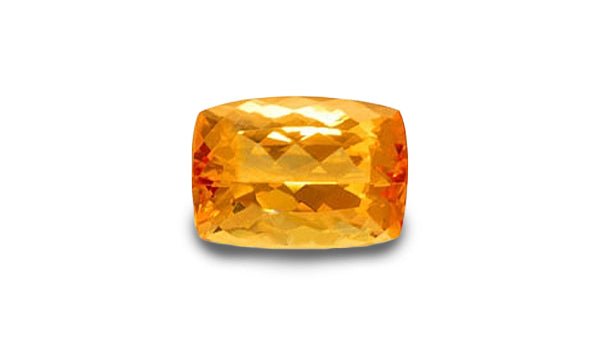
Manganese gives spessartine its orange fire, from sunset tones to the vivid "mandarin" shade found in Namibia and Nigeria. Fine spessartine has moved from collector curiosity to mainstream prestige over the past three decades.
Grossular and Tsavorite
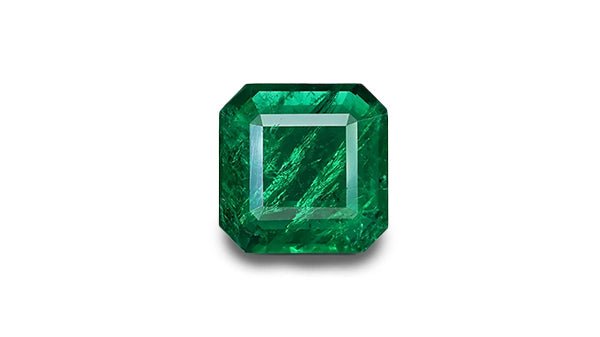
The grossular branch spans green, yellow, and cinnamon brown. Its star is tsavorite, a vivid green garnet colored by vanadium and chromium, discovered in 1967 in Tanzania and found commercially only in a small region of East Africa. Tsavorite competes directly with emerald on color while typically exceeding it in clarity; our complete tsavorite guide covers it in depth.
Andradite and Demantoid
Andradite includes demantoid, the rarest of the classic green garnets, first found in Russia's Ural Mountains in 1868 and beloved by Fabergé's workshops. Demantoid's dispersion, the property that splits white light into rainbow flashes, measures higher than diamond's, which is exactly what its name means: diamond-like.
Uvarovite
A chromium-green garnet that almost never grows large enough to facet. It is collected as sparkling crystal druses rather than cut stones.
Color-Change and Blue Garnet
The Madagascar discovery that rewrote the textbooks belongs to vanadium-bearing pyrope-spessartine blends. These stones shift from blue-green in daylight to violet-purple under incandescent light, and fine examples rank among the rarest garnets ever mined.
The family at a glance:
| Species | Color | Colored by | Key sources | Rarity |
|---|---|---|---|---|
| Almandine | Deep red to wine | Iron | India, Sri Lanka, Brazil | Abundant |
| Pyrope | Crimson red | Magnesium, chromium | Czech Republic, Mozambique | Common |
| Spessartine | Orange to mandarin | Manganese | Namibia, Nigeria, Madagascar | Uncommon |
| Tsavorite (grossular) | Vivid green | Vanadium, chromium | Tanzania, Kenya | Rare |
| Demantoid (andradite) | Green, high fire | Chromium | Russia (Urals), Namibia | Very rare |
| Uvarovite | Emerald green | Chromium | Russia, Finland | Rarely facetable |
| Color-change (blue) | Blue-green to purple | Vanadium | Madagascar (Bekily) | Exceptional |
A Family the Earth Colors Honestly
Garnet holds a distinction that matters more as gem treatments grow more sophisticated: it is one of the very few major gem families that reaches the market essentially untreated. No routine heating, no irradiation, no fracture filling. The color a garnet shows is the color the earth made, which removes a whole category of disclosure risk that buyers must navigate with sapphire, ruby, or topaz. Why that difference matters across the market is explained in our guide to treated versus untreated gemstones.
Where Garnet Is Mined
Garnet forms readily in metamorphic rocks, so the family is mined worldwide, but each species has its heartlands. The Czech Republic remains the historic home of pyrope. India and Sri Lanka supply deep red almandine. Namibia, Nigeria, and Madagascar produce fine spessartine. Tanzania and Kenya hold the world's only commercial tsavorite deposits, Russia's Urals set the standard for demantoid, and southern Madagascar is the source of the color-change blue material. The United States, Brazil, and Mozambique round out supply across the red range.
Judging Quality
Color leads, as with all colored stones: saturation and vividness within each species drive value far more than the species name itself. A vivid mandarin spessartine outprices a dull tsavorite; an electric tsavorite outprices both.
Clarity expectations differ by species. Red garnets and tsavorite are expected to be eye-clean. Demantoid breaks the rule in the most instructive way in gemology: the finest Ural stones contain golden fibrous inclusions called horsetails, radiating wisps of byssolite that prove Uralian origin, and their presence raises the price rather than lowering it. A flaw in one species is a passport in another. How clarity grading handles such cases is covered in our guide to clarity grades.
Cut and size follow familiar logic. Reds are plentiful in larger sizes and priced gently; tsavorite above two carats and demantoid above one carat climb steeply, because their deposits simply do not yield large clean crystals often.
Durability and Care
At 6.5 to 7.5 on the Mohs scale with no cleavage, garnet handles daily wear in rings, bracelets, and necklaces well. Clean it with lukewarm water, mild soap, and a soft cloth. Skip ultrasonic cleaners for included stones, keep garnet away from sudden high heat, which can alter color in some varieties, and store it apart from harder gems such as sapphire and diamond that could scratch it.
History and Symbolism
Garnet's human record is among the longest of any gem. Ancient Egyptians set it in burial jewelry as a stone of life; Roman soldiers carried it into battle for courage; medieval European nobility mounted it in crowns and knightly insignia. Legend even places a garnet aboard Noah's ark, hung as a lantern to light the way through the flood. In the modern calendar, garnet is the birthstone for January, and its red varieties have symbolized love, devotion, and vitality across nearly every culture that mined them. These meanings belong to tradition rather than to any physical property, but few gems have carried them longer. Our birthstone guide covers the full year.
Why Choose Garnet?
Garnet offers what few gem families can: a full spectrum of natural, untreated color at every price level, from accessible deep reds to tsavorite and demantoid that stand among the finest colored stones money can buy. It carries two thousand years of documented history, durability suited to daily wear, and, for Czech collectors especially, a direct line to a national jewelry tradition.
Whether the goal is a first colored stone or a rare green garnet with investment-grade scarcity, the family rewards knowing which species you are looking at. The name garnet is where the story starts, never where it ends.
Explore our selection of natural garnet gemstones, each described with full origin and treatment disclosure.