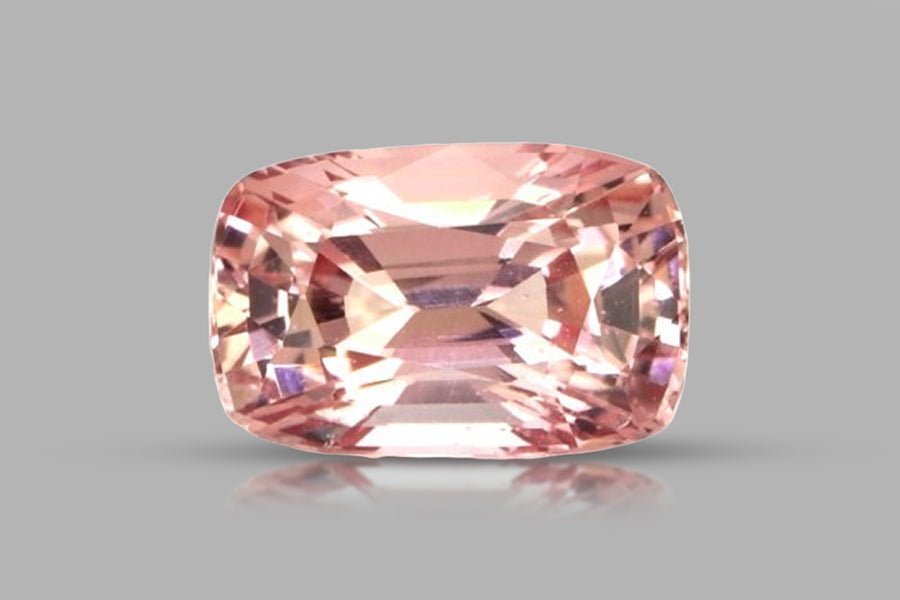
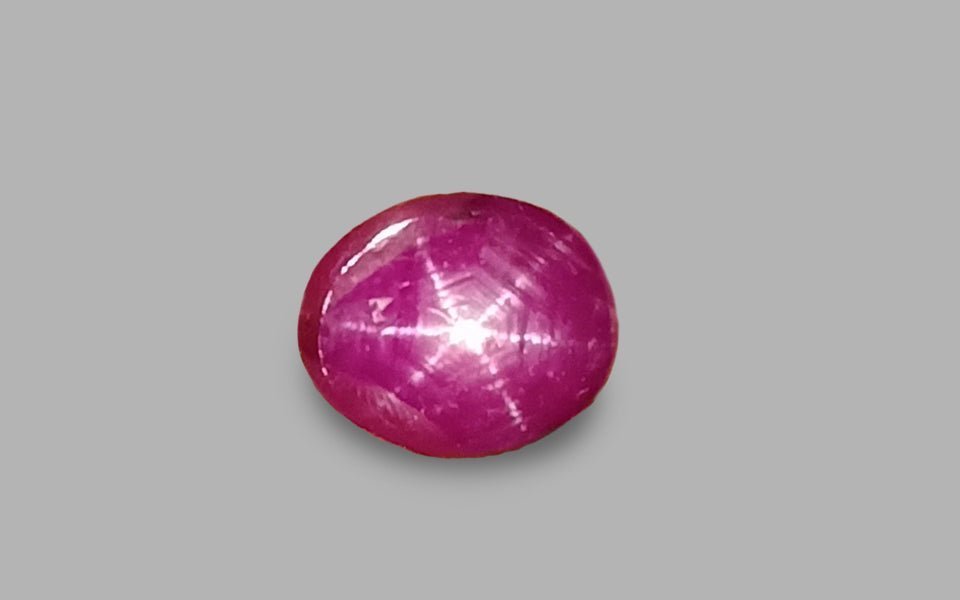
Stocks vs Gemstones – Volatility and Diversification
Introduction – Why Volatility Matters to Investors
Volatility is one of the most visible — and emotionally challenging — aspects of investing. For equity investors, price swings are part of the landscape. Markets rise, correct, and sometimes fall sharply, often in response to factors that extend far beyond the fundamentals of individual companies.
Over long periods, stocks have delivered growth. But that growth comes with drawdowns, uncertainty, and periods of elevated correlation when diversification appears to fail just when it is needed most. For many investors, the question is not whether volatility exists, but how to manage it without sacrificing long-term objectives.
This challenge has led investors to look beyond traditional asset classes. Rather than reducing exposure to growth assets entirely, many seek complementary assets that behave differently — assets whose value is not continuously repriced by markets, algorithms, or daily sentiment.
Investment-grade gemstones are increasingly discussed in this context. Not as replacements for equities, but as potential stabilizers within a broader portfolio. Understanding how stocks and gemstones differ in volatility and diversification is essential for investors focused on balancing growth with resilience.
The Short Answer – Stocks vs Gemstones in One View
Stocks and investment-grade gemstones play fundamentally different roles in a portfolio. Stocks are growth-oriented assets with high liquidity and visible, day-to-day volatility. Investment-grade gemstones are rarity-driven assets whose value evolves through discrete transactions rather than continuous market repricing.
Stocks reward investors for accepting volatility. Price fluctuations reflect changing expectations about earnings, interest rates, and economic conditions. Over time, this volatility is the cost of participating in long-term growth.
Investment-grade gemstones are not growth engines. They function as diversification tools. Because their value is shaped by geological scarcity, certification, and long-term collector demand rather than market sentiment, their price behavior tends to be less correlated with equity markets.
In practical terms, stocks drive portfolio growth, while gemstones can help stabilize portfolios during periods of market stress. They are not substitutes, but complements — serving different objectives within a disciplined long-term investment strategy.
How Stocks Behave – Growth, Liquidity, and Volatility
Stocks are designed to deliver growth. By owning equities, investors participate in corporate earnings, innovation, and economic expansion. This growth potential is the primary reason equities form the core of most long-term investment portfolios.
Price Discovery and Daily Volatility
Equity prices are continuously repriced. News releases, earnings reports, interest rate expectations, geopolitical events, and algorithmic trading all influence prices on a daily — and sometimes minute-by-minute — basis.
This constant price discovery creates visible volatility. While unsettling, it is not inherently negative. Volatility is the mechanism through which markets process information and adjust expectations about future growth.
Correlation and Market Stress
During periods of market stress, correlations between stocks tend to rise. Assets that appear diversified in normal conditions may move together when liquidity tightens or risk aversion increases.
This phenomenon explains why diversification within equities can feel ineffective during sharp sell-offs. When markets reprice risk broadly, volatility becomes systemic rather than asset-specific.
Why Volatility Is the Price of Growth
Over long horizons, equity investors are compensated for enduring volatility. Drawdowns, corrections, and bear markets are part of the cost of accessing growth-driven returns.
For investors with sufficient time horizon and risk tolerance, this tradeoff is acceptable. However, it also underscores why many portfolios benefit from complementary assets that behave differently when equity volatility accelerates.
How Investment-Grade Gemstones Behave
The structural reasons why gemstones retain value across time are explored in greater detail in our article, Why Gemstones Hold Value Over Time .
Investment-grade gemstones operate outside the mechanisms that drive day-to-day movements in financial markets. Their value is not continuously repriced by exchanges, algorithms, or investor sentiment, but evolves through discrete transactions between informed buyers and sellers.
Transaction-Based Pricing (Not Mark-to-Market)
Unlike stocks, gemstones are not marked to market daily. There is no ticker, no closing price, and no instant reaction to macroeconomic headlines. Price changes occur only when transactions take place, often after extended negotiation and quality assessment.
This transaction-based pricing reduces visible volatility. While prices do change over time, adjustments tend to be gradual, reflecting shifts in scarcity and demand rather than short-term emotional responses in markets.
Rarity and Supply Inelasticity
The supply of investment-grade gemstones is inherently inelastic. Geological conditions that produce high-quality stones cannot be scaled or accelerated in response to demand. Once exceptional material is absorbed into long-term ownership, it effectively exits the open market.
This structural scarcity creates a value dynamic that differs fundamentally from equities. Rather than expanding supply, higher demand often results in increased selectivity and price differentiation within narrow quality tiers.
Low Correlation by Structure
Because gemstone pricing is driven by rarity and specialist demand rather than earnings cycles or interest rates, investment-grade gemstones tend to exhibit low correlation with equity markets.
This does not imply immunity from all economic forces. However, gemstones are largely insulated from the rapid repricing that characterizes financial assets, making them structurally suited to diversification during periods of heightened equity volatility.
Volatility Compared – Visibility vs Reality
When investors compare stocks and gemstones, volatility is often the most misunderstood factor. This is because volatility in financial markets is highly visible, while volatility in transaction-based assets is largely hidden.
Visible Volatility in Stocks
Stock market volatility is transparent and continuous. Prices move daily, charts update in real time, and drawdowns are immediately visible to all market participants.
This visibility amplifies emotional responses. Even long-term investors are constantly reminded of short-term fluctuations, which can trigger behavioral decisions that are disconnected from fundamentals. In this sense, volatility is not only a market phenomenon, but also a psychological one.
Invisible Volatility in Gemstones
Gemstones do not display volatility on a screen. There is no daily price chart, no index, and no headline-driven repricing. As a result, price changes occur quietly, through individual transactions rather than public market movements.
This does not mean gemstones are static. Transaction spreads, negotiation outcomes, and changes in demand all influence realized prices. However, these changes are absorbed over time, making volatility less visible and less disruptive to long-term holders.
The key distinction is not whether volatility exists, but how it is experienced. Stocks expose investors to constant price movement, while gemstones expose investors to valuation changes only when decisions to transact are made.
Diversification – What Actually Reduces Risk
Diversification is often misunderstood as simply owning more assets. In practice, true diversification is not about quantity, but about combining assets that behave differently under the same economic conditions.
Correlation vs Concentration
Holding a large number of stocks does not automatically reduce risk if those stocks respond to the same macroeconomic forces. During market stress, correlations between equities tend to rise, causing diversified stock portfolios to move together.
This phenomenon explains why portfolios that appear diversified in normal conditions can experience sharp drawdowns simultaneously. Diversification within a single asset class reduces idiosyncratic risk, but not systemic risk.
The Role of Non-Correlated Assets
Risk is reduced most effectively by introducing assets whose value drivers are independent of equity markets. Non-correlated assets respond to different forces, such as physical scarcity, transaction-based pricing, or long-term structural demand.
Because investment-grade gemstones are driven by rarity and specialist demand rather than earnings cycles or interest rates, they can provide diversification benefits that are difficult to achieve within traditional financial markets alone.
Where Gemstones Fit (and Where They Don’t)
Gemstones are not designed to replace equities. They do not generate income and should not be viewed as growth engines.
Their role is complementary. By occupying a portion of a portfolio focused on stability, scarcity, and low correlation, investment-grade gemstones can help moderate overall volatility without compromising long-term capital preservation.
When Stocks Make Sense vs When Gemstones Do
For most investors, the choice between stocks and investment-grade gemstones is not an either-or decision. Each asset class serves a different purpose depending on objectives, time horizon, and tolerance for volatility. Understanding when each makes sense helps align strategy with reality.
When Stocks Make Sense
Stocks are well suited for investors seeking long-term growth, income potential, and high liquidity. Equities provide exposure to economic expansion, innovation, and corporate profitability, making them effective growth engines over extended periods.
Stocks are particularly appropriate when investors have a long time horizon, the ability to endure drawdowns, and a need for flexibility through easy buying and selling. Volatility is an inherent feature, but for growth-oriented goals, it is often an acceptable cost.
When Investment-Grade Gemstones Make Sense
Investment-grade gemstones are more appropriate when the objective is stability rather than growth. They appeal to investors who value capital preservation, low correlation with financial markets, and discretion in ownership.
Gemstones are especially relevant for investors willing to trade immediacy for resilience. They require patience, careful selection, and documentation, but in return offer exposure to scarcity-driven value that operates outside continuous market repricing.
In practice, stocks provide momentum, while gemstones provide balance. Used together, they can address different risks within a diversified long-term investment strategy.
How Investors Combine Stocks and Gemstones
Sophisticated investors rarely evaluate stocks and tangible assets in isolation. Rather than choosing one over the other, they assign each a specific role within a broader portfolio designed to balance growth, volatility, and resilience.
Stocks typically serve as the primary growth engine. They provide exposure to economic expansion, innovation, and earnings growth, accepting volatility as the cost of long-term appreciation. For investors with sufficient time horizon, equities remain indispensable.
Investment-grade gemstones complement this growth exposure by introducing assets whose value is driven by scarcity rather than market cycles. Their transaction-based pricing and low correlation to equities can help dampen portfolio volatility during periods of market stress.
In practice, this combination creates a layered structure. Stocks absorb short-term fluctuations and deliver growth, while gemstones provide stability and optionality outside the continuously repriced financial system.
When integrated thoughtfully, gemstones do not compete with equities. They support them by addressing risks that diversification within stocks alone cannot fully mitigate, particularly during periods of systemic market volatility.
Explore Further – Related Comparisons and Next Steps
Understanding how stocks and investment-grade gemstones differ in volatility and diversification is a key step toward building a resilient long-term portfolio. For investors who want to explore how gemstones behave relative to other asset classes, the following comparisons provide additional perspective.
-
Gold vs Gemstones – Store of Value Compared
A detailed analysis of liquidity, standardization, and how both assets function as long-term stores of value. -
Collectible Assets vs Investment-Grade Gemstones
An exploration of the difference between passion-driven collectibles and assets selected for structural scarcity and capital preservation. -
Why Invest in Gemstones? – Rarity, Value, and Long-Term Growth
The comprehensive investment framework that explains where gemstones fit within a diversified long-term strategy.
Taken together, these articles form a coherent framework for investors who seek growth through equities while using scarcity-driven assets to stabilize portfolios across market cycles.
Frequently Asked Investor Questions: Stocks vs Gemstones
How do gemstones and stocks correlate during market crashes?
During market crashes, correlations between stocks tend to rise as investors sell risk assets broadly and liquidity tightens. In these periods, equity diversification often becomes less effective because many stocks move together.
Investment-grade gemstones typically exhibit lower correlation during market stress because their value is not continuously repriced and is not driven by earnings, interest rates, or forced selling. While gemstone markets can slow during crises, their pricing behavior is structurally different from equities.
Are investment-grade gemstones correlated with the stock market over time?
Over longer horizons, investment-grade gemstones have generally shown low correlation with stock markets. Their value is shaped by rarity, certification, and long-term collector demand rather than market sentiment or economic cycles.
This does not mean gemstones are immune to economic conditions, but their pricing dynamics are largely independent of equity indices, making them structurally suited to diversification.
How is gemstone volatility assessed compared to stock market volatility?
Stock market volatility is measured using quantitative metrics such as daily price movements, beta, and volatility indices. Gemstones do not trade on public exchanges and do not have standardized price indices.
As a result, gemstone volatility is assessed qualitatively through transaction data, auction results, bid-ask spreads, and changes in realized prices over time. This makes gemstone volatility less visible but no less real, and fundamentally different from mark-to-market volatility in equities.
Do gemstones reduce overall portfolio volatility?
When used as a complementary allocation, investment-grade gemstones can help moderate overall portfolio volatility because their value drivers differ from those of stocks.
They are not designed to smooth short-term fluctuations, but to provide structural diversification that becomes most relevant during periods of heightened equity volatility and correlation.
How much of a portfolio is typically allocated to gemstones?
There is no universal allocation that applies to all investors. Gemstones are generally used as a complementary rather than core allocation, with sizing determined by objectives, time horizon, liquidity needs, and tolerance for complexity.
Rather than focusing on a specific percentage, investors typically assess whether gemstones meaningfully diversify risk and contribute to long-term capital preservation without compromising flexibility elsewhere in the portfolio.
How does gemstone liquidity compare to stocks during market selloffs?
Stocks offer immediate liquidity during selloffs, but that liquidity often comes at the cost of forced pricing and rapid drawdowns. Mark-to-market selling can lock in losses regardless of asset quality.
Investment-grade gemstones are sold through specialist channels and are not subject to forced liquidation. While sales may take longer, pricing is negotiated based on rarity, documentation, and buyer demand rather than panic-driven market conditions. In this context, gemstone liquidity prioritizes value preservation over speed.
What matters most when selecting gemstones for diversification?
Selection quality is critical. Investment-grade diversification focuses on natural origin, minimal treatment, strong color, structural integrity, and independent certification.
The objective is to hold gemstones that sit within constrained supply categories and remain attractive to informed buyers over long periods, rather than stones chosen purely for size, novelty, or short-term appeal.